Your Guide to an Aviva Motor Insurance Claim
Filing an Aviva motor insurance claim is a process that begins the moment an accident occurs. What you do in those first crucial moments—ensuring everyone's safety, carefully avoiding any admission of fault and methodically gathering information at the scene—sets the stage for a smooth and successful claim.
What to Do Immediately After a Car Accident
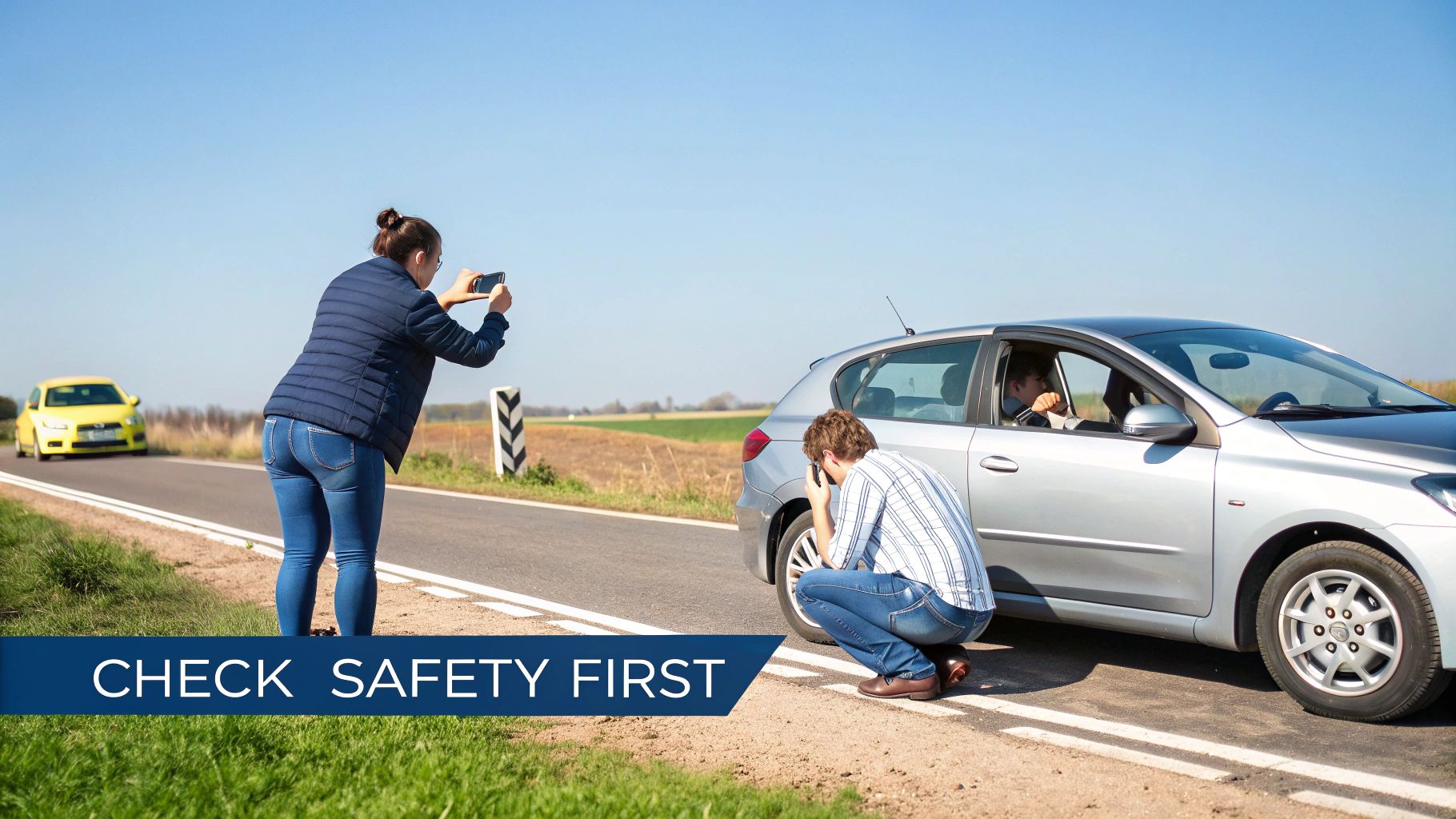
The minutes right after a collision can be disorienting but your next steps will have a massive impact on your claim. The absolute first priority is always safety. Check yourself and others for injuries; if anyone is hurt, call 999 straight away. If it’s safe to do so, move your vehicle to the side of the road to keep the scene clear and prevent any further incidents.
Once you know everyone is safe, it’s time to switch gears to documentation. This is where you need to be disciplined. You must exchange details with the other driver but it is vital that you do not discuss who was at fault or even apologise. Stick to collecting the facts. This simple act of discipline prevents you from accidentally admitting liability which could complicate things down the line.
Gathering Critical Information
To give your claim the solid foundation it needs, you will need to get some specific details from the other party involved. Do not leave the scene without them.
- Personal Details: The other driver's full name, home address and a contact telephone number.
- Vehicle Information: The make, model, colour and registration number for every vehicle involved in the incident.
- Insurance Details: The name of their insurance company and, if they have it, their policy number.
This information is non-negotiable. Without it, your insurer will have a tough time processing the claim and recovering its costs which could put your No Claims Discount at risk. A great tip is to use your smartphone to snap a quick, clear photo of their driving licence or insurance certificate—it is fast and accurate. For an extra layer of undeniable proof, you can learn more about how geo-location data strengthens insurance claims.
This simple three-step process is your best friend at the scene of an accident. It keeps you focused on what truly matters.
Following this clear sequence—Safety, Document, Inform—helps you stay calm and methodical during what is always a stressful event, making sure you do not miss a single critical step.
Documenting the Scene
Beyond just swapping details with the other driver, you need to create your own detailed record of what happened.
Take plenty of clear photos. Get shots of the damage to all vehicles from multiple angles, capture the final positions of the cars and zoom out to show the wider scene, including any road markings, traffic lights or relevant signs. Make a note of the exact time, date and what the weather conditions were like. If there are any independent witnesses, politely ask for their contact details; a neutral account of events can be invaluable.
All this provable evidence is what makes for a straightforward Aviva motor insurance claim .
A robust collection of evidence removes ambiguity and helps claims handlers understand exactly what happened. This clarity is what allows insurers like Aviva to process valid claims efficiently and fight fraudulent ones effectively, safeguarding the interests of all policyholders.
The good news is that Aviva has a strong track record of looking after its customers. In a single year, the insurer settled an incredible 99.3% of the 350,000 motor claims it received which speaks volumes about its reliability for UK drivers. You can read more about these impressive figures in Aviva's claims report.
To give you a clearer picture of the journey ahead, here is a breakdown of the entire claims process, from the incident right through to resolution.
Key Stages of an Aviva Motor Insurance Claim
The Aviva claims process is designed to be logical and supportive, guiding you from the initial report to the final settlement. Understanding these phases helps you know what to expect and how to prepare for each step.
| Stage | Key Actions | Primary Goal |
|---|---|---|
| 1. Incident & Reporting | Secure the scene, gather provable evidence and notify Aviva as soon as possible via phone or online portal. | To officially open the claim and provide Aviva with the initial facts of the incident. |
| 2. Initial Assessment | An Aviva claims handler reviews your report, verifies policy details and determines liability based on the evidence provided. | To establish the basic circumstances of the claim and decide on the next steps for repairs or settlement. |
| 3. Vehicle Inspection & Repair | Your vehicle is assessed by an approved garage. Aviva authorises repairs or, if it is a total loss, calculates a settlement value. | To accurately determine the extent of the damage and initiate the process of either repairing or replacing the vehicle. |
| 4. Claim Settlement | Aviva covers the cost of repairs (minus your excess), pays out the market value for a total loss and handles third-party costs if you were at fault. | To finalise all financial aspects of the claim, pay out any owed amounts and resolve the matter with all involved parties. |
| 5. Claim Closure | Once all payments are made and repairs are complete, the claim is officially closed. Your policy and No Claims Discount are updated accordingly. | To conclude the process, ensure all obligations have been met and provide you with final documentation. |
Each stage builds on the last and providing clear, comprehensive information from the very beginning is the best way to ensure everything moves along without a hitch.
Building a Provable Case for Your Claim
When it comes to your Aviva motor insurance claim, the strength of your case rests entirely on the quality of the evidence you provide. It is not just about telling them what happened; it is about showing them. In an industry constantly battling fraud, creating an undeniable file of proof is the single best way to ensure a fast, fair resolution.
Insurers have to verify every single detail. It might feel slow but it is a necessary defence against fraudulent claims that end up costing everyone more through higher premiums. The Association of British Insurers estimates that undetected general insurance fraud costs the industry over £2 billion a year. That cost inevitably trickles down to honest policyholders like you. Your detailed evidence helps Aviva clearly distinguish your genuine claim from a fraudulent one.
The Power of Visual Evidence
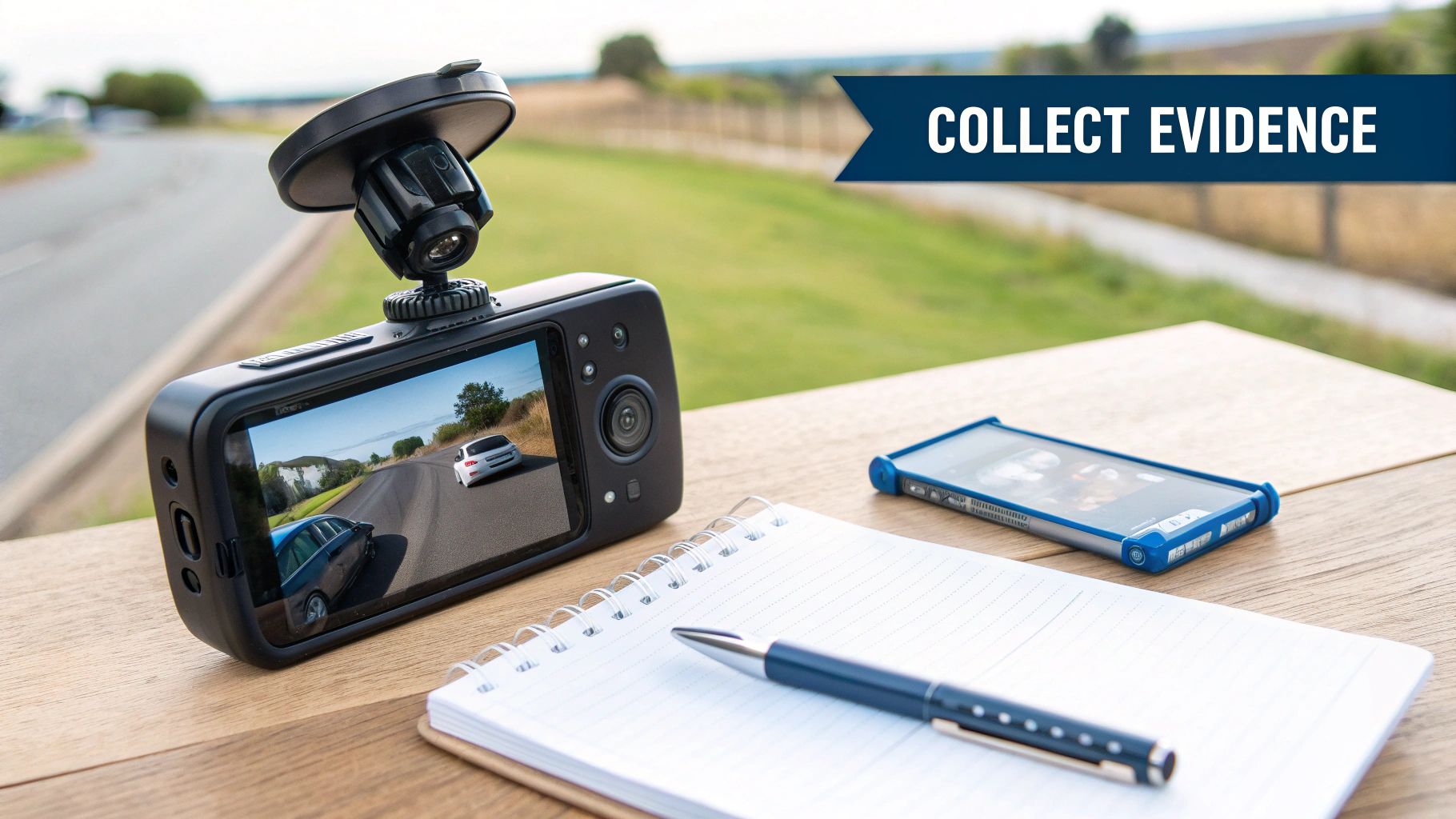
Photographs and videos are your best friends at the scene of an accident. They offer an impartial, time-stamped record that is incredibly difficult to argue with.
- Dashcam Footage: This is the gold standard. Good dashcam footage can single-handedly prove what happened, showing the sequence of events and instantly clarifying who was at fault.
- Photographs: Do not just snap a picture of the dent in your car. Take wide-angle shots to capture the whole scene—include road markings, traffic signs, any debris on the road and where all the vehicles ended up.
- Specific Damage Shots: Now get closer. Capture clear, close-up images of the impact points on all vehicles involved. These photos are vital for the assessors to understand the forces at play and confirm the damage is consistent with the incident you have described.
This kind of visual proof cuts through the noise. It minimises the "he said, she said" arguments that can drag a claim out for weeks.
Documenting Environmental and Witness Details
Beyond the obvious damage, the surrounding context paints the full picture for the claims handler. You would be surprised what a difference small details can make.
Was the sun low in the sky, causing a blinding glare? Had it just rained, making the road surface slick? Note it down. Details about the road itself, like a blind corner or a poorly marked junction, can also be crucial contributing factors.
A detailed, multi-faceted evidence file not only substantiates your claim but also demonstrates your credibility. It shows the insurer you are organised and transparent which helps build trust and accelerates the assessment process.
If anyone saw what happened, their input is invaluable. A statement from an independent witness—someone with no skin in the game—carries enormous weight. It can corroborate your version of events and make your claim significantly stronger.
When to Involve the Police
There are certain situations where you absolutely must contact the police and get a crime reference number. This is not optional for claims that involve:
- Theft or attempted theft of your vehicle.
- Vandalism or any other malicious damage.
- Any incident where someone has been injured.
- A 'hit and run' where the other driver leaves the scene.
This reference number becomes a critical piece of evidence for your Aviva motor insurance claim . It officially logs the incident and, if necessary, triggers a formal investigation. By taking the time to compile all this proof, you build a solid, provable case that protects you from unfair blame and helps Aviva process your claim with the confidence and speed you need.
How Insurance Fraud Hits Everyone in the Pocket
It is easy to think of insurance fraud as a victimless crime, one that only affects massive corporations. The reality is much closer to home. Every single dishonest claim, from a small exaggeration about a dent to a fully-staged 'crash for cash' scam, sends a ripple effect across the entire system.
Ultimately, that ripple reaches every honest driver in the UK.
When insurers pay out on fraudulent claims, those losses have to be absorbed. This forces providers like Aviva to increase premiums for everyone to make up for the deficit. In short, honest policyholders end up footing the bill for the actions of a dishonest few.
The Real Cost of a Fake Claim
The financial damage from insurance fraud is staggering. The industry loses billions of pounds each year to fabricated or inflated claims and that cost gets passed directly to you, the consumer.
Think of it as a hidden tax on your honesty. Every pound an insurer pays out for a fraudulent claim is a pound they have to recover and that recovery happens through higher annual premiums for you, your family and your neighbours.
A truthful and accurate Aviva motor insurance claim is not just a policy requirement—it is a collective responsibility. Keeping the claims process honest helps to keep insurance affordable for all drivers.
This is exactly why insurers invest so much in sophisticated fraud detection. They are not trying to avoid paying genuine claims; they are working to protect their honest customers from the financial fallout of crime.
How Aviva Fights Back
Aviva has a dedicated counter-fraud team that uses advanced analytics and data screening to spot suspicious patterns. They investigate everything from small inconsistencies in accident reports to potential links between people involved in multiple incidents.
And their efforts pay off. In just the first half of a recent year, Aviva's team uncovered over 6,000 fraudulent claims, preventing losses of more than £60 million . That's a saving of over £334,000 every single day for honest customers.
But what happens to those who get caught? The consequences are severe and go far beyond just having a claim denied.
- A Criminal Record: A conviction for insurance fraud leaves you with a criminal record which can seriously impact future job prospects, travel and getting credit.
- Hefty Fines: The courts can impose unlimited fines on anyone found guilty of fraud.
- Prison Time: For more serious offences like organised 'crash for cash' rings, prison sentences are common. In one year alone, prison sentences resulting from Aviva's fraud investigations totalled more than 32 years .
These penalties show just how seriously this is taken. If you are worried about scams, it is worth learning how to spot fraud in car insurance and prove false claims.
By submitting a completely honest Aviva motor insurance claim , you are not just meeting your legal obligations—you are playing a crucial part in keeping premiums fair for everyone.
Submitting and Tracking Your Aviva Claim
Right, you have gathered your evidence and you are ready to get the ball rolling. The next step is to officially lodge your Aviva motor insurance claim . Aviva gives you a few ways to do this and each one has its own benefits, so you can pick whatever feels easiest for you.
You can fire up the MyAviva app or head to their online portal. Honestly, these digital routes are usually the fastest way to get things started. You can upload photos and documents straight from your phone or computer which saves a ton of hassle. If you would rather talk it through with a person, though, you can always ring Aviva's dedicated claims line.
No matter which path you take, you will need a few key details to kick things off. Having them ready beforehand will stop any annoying delays.
Getting Your Ducks in a Row
Before you log in or dial that number, grab these bits of information:
- Your Policy Number: This is the first thing they will ask for to find your account.
- Incident Details: Be ready with the exact date, time and where the accident happened.
- Third-Party Information: All those details you swapped with the other driver—name, address and their insurance company.
- Police Reference Number: If the police attended the scene, this number is a must-have.
Getting this stuff organised makes that first contact so much smoother. It means the claims handler can get straight to work assessing your case instead of chasing you for the basics.
So, What Happens Next?
Once your claim is officially in the system, Aviva will assign a dedicated claims handler to your case. This person is your main point of contact and they will be the one guiding you through everything and keeping you in the loop. Their first job is to review all the evidence and figure out liability based on what you have provided.
It is really important to set realistic expectations for how long this might take. A simple windscreen chip could be sorted in a few days. But a complex case where liability is disputed or the damage is severe? That could easily take weeks or even months to fully settle.
Depending on how bad the damage is, Aviva might need to send an assessor to inspect your vehicle. This could happen at one of their approved garages or sometimes they can do it remotely just using the photos you sent in. The assessor’s report is what ultimately decides whether your car will be repaired or written off as a total loss.
Choosing How to Submit Your Claim
To help you decide the best way to file, here is a quick rundown of your options.
Aviva Claim Submission Methods Compared
| Method | Best For | Speed | Documentation Handling |
|---|---|---|---|
| MyAviva App | Quick, on-the-go submissions right after an incident. Ideal for smartphone users. | Fastest. Can start the claim within minutes. | Excellent. Upload photos and documents directly. |
| Online Portal | Detailed submissions from a computer with easy access to all your files. | Fast. A solid digital option. | Very good. Simple drag-and-drop for uploads. |
| Telephone | Those who prefer talking to a person or have complex situations to explain. | Slower start but direct human contact. | Can be cumbersome. May need to email docs separately. |
Each method gets the job done but the app and online portal are definitely built for speed and convenience, letting you manage everything digitally.
Communication is your best friend during this period. Your handler should give you regular updates but do not ever feel hesitant to reach out if you have questions or need clarification. For more complicated claims, it can be a huge help to understand the principles behind crafting a demand letter to an insurance company for an auto accident. Knowing how to formally and clearly outline your losses can make a real difference to your final settlement.
Navigating Complex Claim Scenarios

While many car insurance claims are pretty straightforward, some situations are anything but. Knowing how to handle the trickier scenarios can make a huge difference to the outcome of your Aviva motor insurance claim—and save you a mountain of stress.
One surprisingly common yet complex issue is damage caused by rodents. It might sound a bit strange but rats and squirrels chewing through vital wiring is a growing headache for UK drivers. The key here is proving what caused the damage. You will need to supply clear photos of any chewed wires, nests tucked away in the engine bay or droppings.
A mechanic’s report confirming rodent activity is also a must-have. This helps Aviva verify that the damage was not just normal wear and tear but a specific, insurable event. And it is happening more than you would think. Between two recent years, Aviva saw a 28% increase in claims for rodent damage, with the average claim climbing to £2,494 . You can read more about it in Aviva's rodent damage report.
Dealing With Untraceable or Uninsured Drivers
It does not get much more frustrating than a hit-and-run or a collision with an uninsured driver. What you do in the moments after is absolutely crucial for a successful claim.
- Hit-and-Run Incidents: If the other driver bolts from the scene, your first job is to report it to the police immediately. You must get a crime reference number. Try to grab details from any witnesses and jot down everything you can remember about the other car—even a partial plate or a basic description can be a massive help.
- Collisions with Uninsured Drivers: When you find out the other party has no insurance, you still need to report it to the police. Your claim will then most likely go through the Motor Insurers’ Bureau (MIB), an organisation set up to compensate victims of uninsured and hit-and-run drivers. Aviva will help guide you through this process.
In these tough situations, solid documentation is your best friend. Dashcam footage, witness statements and a police report can turn a nightmare scenario into a provable case which is vital for protecting your No Claims Discount if you have uninsured driver protection.
When Your Vehicle Is a Total Loss
Another tricky area is when your car is declared a 'total loss'—more commonly known as a write-off. This happens if the cost to repair the damage is more than the car's market value. Aviva will offer you a settlement based on its pre-accident value, minus your policy excess. You will need to hand over the V5C logbook and a few other documents before they can release the payment.
Understanding your rights and how the valuation works is vital here. It is a good idea to get familiar with what to expect by reading this UK guide to total vehicle loss claims. Being prepared for these less common but highly stressful events ensures you know exactly what to do, strengthening your Aviva motor insurance claim right from the start.
Your Aviva Motor Insurance Claim Questions Answered
Navigating the claims process can feel like stepping into the unknown, especially if this is your first time making an Aviva motor insurance claim . To bring some clarity to the situation, let us walk through some of the most common questions we hear from policyholders.
Will Making a Claim Affect My No Claims Discount?
In most cases, yes. Making a claim will usually impact your No Claims Discount (NCD), unless you have NCD Protection included in your policy. If the incident is deemed to be your fault, you can expect to lose some, or all, of your discount when it is time to renew.
There is a silver lining, though. If the accident was not your fault and Aviva manages to recover every penny from the other driver's insurer, your NCD should come out unscathed. Having NCD Protection is a great safety net, as it lets you make a set number of claims in a year without your discount taking a hit. It is always worth digging out your policy documents to check.
How Long Does an Aviva Motor Insurance Claim Typically Take to Settle?
This is the classic "how long is a piece of string?" question. The time it takes to settle a claim really depends on how complicated it is. A straightforward windscreen repair? That can often be sorted in just a few days.
On the other hand, more complex claims—especially those involving personal injury, arguments over who was at fault or serious vehicle damage—can stretch out for several months. Your claims handler at Aviva will be your main point of contact; they will keep you in the loop and should be able to give you a clearer timeline once they have assessed everything. The faster you can provide all the necessary information, the quicker things will move.
The accuracy and provability of your initial information are critical. Honest, well-documented claims supported by clear evidence are processed far more efficiently, reducing delays and stress for everyone involved.
For quick answers to common queries about your claim, you might find assistance from a digital insurance guide which can offer immediate information on general insurance topics.
What Happens If My Vehicle Is a Write-Off?
If the repair bill for your vehicle is higher than what the car is actually worth on the market, Aviva will declare it a total loss or a 'write-off'. When this happens, they will offer you a settlement payment. This figure is based on the car's market value right before the accident, minus your policy excess.
Once you agree to the offer and send over the required documents (like the V5C logbook), the payment is processed. From that point, the damaged vehicle officially belongs to the insurer. A quick but important tip: make sure you clear out all your personal belongings before the salvage agent comes to collect it.
What If I Disagree with Aviva's Decision?
It is frustrating when you do not agree with the outcome of your claim. Your first move should always be to have a frank conversation with your claims handler. Lay out your concerns and present any extra evidence you think might strengthen your position.
If that discussion does not resolve things, you can escalate it by making a formal complaint through Aviva's internal procedure. Still not satisfied? You have the right to take your case to the Financial Ombudsman Service. They are an independent body that can review everything and make a final, binding decision.
At Proova , we believe in making the insurance process more transparent and efficient. By providing a secure way to document your assets before a claim is ever needed, we help you build a provable case that expedites validation and protects against fraud. Simplify your insurance journey and ensure you are prepared for anything. Find out more at https://www.proova.com.