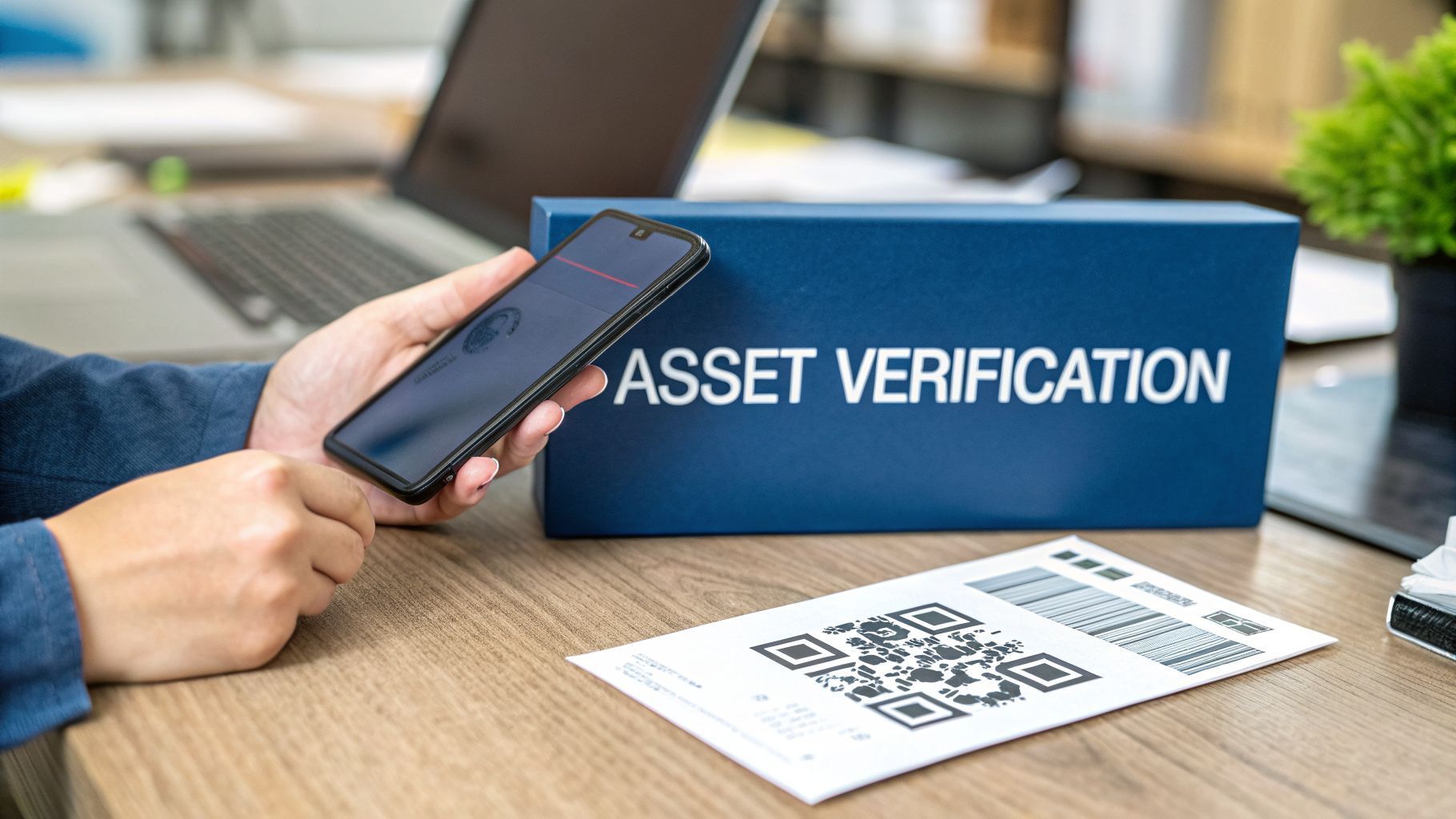
Why Laptops Are a Growing Claims Dispute Risk for Insurers
For any insurer, a laptop claim should be straightforward. A policyholder's device is stolen or damaged, a claim is filed, and a settlement is issued. Simple. Yet, these seemingly low-value claims are becoming a consistent source of disputes, delays, and claims leakage. The problem isn't the incident itself; it's the complete lack of verifiable evidence at the point of claim.
When a policyholder cannot prove they owned a specific £1,500 laptop, or evidence its condition before it was dropped, the claims process grinds to a halt. This single point of failure turns a simple transaction into a protracted dispute, damaging customer relations and inflating claims handling costs.
The Evidence Gap in Personal Electronics Claims

In an era of remote work, the value tied up in personal electronics has surged. Laptops are no longer just consumer gadgets; they are critical business assets. Yet the claims process remains reliant on outdated, unreliable forms of proof. When a policyholder makes a claim for a stolen or damaged laptop, insurers require verification of three key facts:
- Proof of Ownership: That the claimant genuinely owned the device.
- Item Specification: The exact make, model, and value of the laptop.
- Pre-Incident Condition: The device's physical state immediately before the loss occurred.
Without this evidence, the claim enters a cycle of dispute. The claims handler is forced to question the laptop's stated value, request receipts the policyholder discarded years ago, or investigate whether pre-existing damage contributed to the failure. This friction is inefficient and costly for insurers and deeply frustrating for customers.
The Real-World Claims Hurdle
Consider a typical scenario: a policyholder reports a £1,200 laptop stolen during a burglary. The claims handler requests the serial number and proof of purchase. The policyholder cannot find the two-year-old receipt and never recorded the serial number. The claim is now stalled, dependent on a drawn-out, manual verification process that could have been avoided entirely.
This is a primary driver behind the growth in the UK gadget insurance market, which surged from 7.87 million policies in 2023 to a projected 8.46 million in 2024 —a 7.5% annual increase. Policyholders are seeking certainty, but the fundamental evidence gap remains.
The difference between an efficient, low-touch claim and a costly, disputed one is the quality of documentation. A verified inventory at policy inception is the most effective defence against disputes and claims leakage.
By shifting evidence collection from post-claim to pre-inception, the entire dynamic changes. It moves the process from a stressful negotiation to a simple, evidence-based transaction. An undeniable, timestamped record of a policyholder's assets gives claims teams everything needed to process claims quickly and fairly. You can find out more about how this applies to broader protection in our guide on what contents insurance is and how to claim.
This guide outlines the common coverage types and, crucially, how pre-inception verification can eliminate the ambiguity that plagues laptop and gadget claims.
Understanding Policyholders' Laptop Coverage Options
From an insurer's perspective, understanding how a policyholder has covered their laptop is critical to assessing risk and managing claims. The type of policy dictates the likely coverage limits, exclusions, and the potential for underinsurance. An honest assessment of a policyholder's usage patterns is the key determinant of adequate cover.
For example, a laptop used exclusively in a home office presents a different risk profile to one that travels daily to client sites and co-working spaces. The former is primarily exposed to risks like theft or fire, whereas the latter faces a significantly higher risk of accidental damage or loss in transit.
Common Policy Types and Their Limitations
Policyholders typically secure cover through one of three main routes, each with inherent limitations that can lead to claim disputes.
- Home Contents Insurance: This is the default for many but is often inadequate. The "single-item limit" (often around £1,500 ) means any high-value laptop (e.g., a £2,500 MacBook Pro) is likely underinsured unless specified. Furthermore, standard policies exclude use "away from home," leaving a significant coverage gap for mobile workers.
- Specialist Gadget Insurance: These policies offer more comprehensive cover, including accidental damage and worldwide use. However, they introduce complexity with specific exclusions for cosmetic damage or theft from an unattended vehicle, creating potential points of contention during a claim.
- Travel Insurance: Often includes gadget cover, but the sub-limits are typically so low (sometimes just £300 ) that they are completely unsuitable for anything other than the most basic devices. Reliance on this cover is a clear indicator of severe underinsurance.
Understanding these coverage nuances is key. A policyholder with a £2,500 laptop on a standard home contents policy represents a significant underinsurance risk and a high probability of a disputed claim under the average clause.
Clarity at inception is the solution. Verifying the asset's value and ensuring the policy limits are adequate from day one prevents these disputes before they can occur. It provides underwriters with accurate risk data and gives claims teams a clear basis for settlement.
The Financial Impact of Unverified Laptop Claims
The lack of pre-inception verification for assets like laptops has a direct and measurable impact on an insurer's bottom line. Each unverified claim introduces friction, manual intervention, and the potential for fraud, all of which contribute to claims leakage and operational inefficiency.
The Cost of Ambiguity
When a claim is submitted without clear evidence, the cost to the insurer multiplies.
- Increased Handling Time: Claims handlers must spend valuable time trying to validate ownership and value through bank statements or online searches, turning a 15-minute task into a multi-day investigation.
- Dispute Resolution Costs: Disagreements over value or pre-existing damage can escalate, consuming more resources and potentially requiring loss adjuster involvement for a relatively small claim.
- Fraud Risk: The absence of a pre-incident condition record creates opportunities for opportunistic fraud, such as claiming for pre-existing damage or exaggerating the value of the device.
The UK gadget insurance market illustrates the scale of the problem. While accidental damage claims account for 78.57% of the market, the fastest-growing segment is theft and loss. These claims are the most susceptible to fraud and dispute without verifiable proof of ownership, such as a recorded serial number.
A Comparison of Laptop Insurance Options
Understanding the policy landscape helps insurers identify potential risk areas. Policyholders often choose convenience over comprehensive cover, leading to predictable claims issues.
| Policy Type | Insurer's Risk Exposure | Common Dispute Point | Claims Handler Action |
|---|---|---|---|
| Home Contents | High risk of underinsurance due to single-item limits. | "I didn't know I had to specify my £2,500 laptop." | Application of average, leading to customer dissatisfaction. |
| Gadget Insurance | Misunderstanding of specific exclusions (e.g., cosmetic damage). | "The policy should cover this scratch on the screen." | Upholding policy terms, which can be perceived as unfair. |
| Travel Insurance | Gross underinsurance; policy unsuitable for the asset. | "Why are you only paying out £300 for my £1,200 laptop?" | Enforcing low sub-limits, causing severe customer friction. |
| Retailer Plans | Often perceived as comprehensive but can have restrictive terms. | Similar to gadget policies, often with higher premiums. | Managing expectations set at the point of sale. |
The common thread is that all these issues—underinsurance, misunderstood exclusions, and valuation disputes—can be mitigated or eliminated entirely by capturing verified asset data at the start of the policy.
Mitigating Risk with Pre-Inception Verification
The most effective way to reduce disputes, combat fraud, and lower claims handling costs is to eliminate uncertainty from the outset. By requiring policyholders to create a verified digital inventory of their high-value items like laptops, insurers can build a robust, evidence-based claims process.
This is not about adding friction for the customer; it's about creating certainty for both parties.
An irrefutable, timestamped record of the asset makes the claims handler's job straightforward. It provides an objective foundation for a fast and fair settlement, transforming the customer experience.

Creating an Evidential Record
A comprehensive verification process should capture three core components:
- Proof of Purchase: An uploaded receipt or invoice establishes the original value and ownership. In its absence, a bank statement can serve as secondary proof.
- The Serial Number: A clear, legible photo of the device's unique serial number provides incontrovertible proof of the specific item being insured. This is critical for preventing fraud.
- Timestamped Condition Photos: A series of timestamped photographs showing the laptop from all angles captures its pre-inception condition. This neutralises any potential arguments about pre-existing damage contributing to a claim.
Manually collecting and storing this information is unreliable. Policyholders forget, lose files, or fail to capture the necessary details. This is where a dedicated platform like Proova provides the solution, creating a structured, secure, and verifiable digital record.
A verified digital inventory is not just a customer convenience; it is a powerful risk management tool that transforms a claim from a negotiation into a simple verification.
Integrating such a tool allows insurers to:
- Catalogue and Verify: Securely store all relevant photos, documents, and serial numbers in one organised, accessible report.
- Establish Condition: Use timestamped evidence to create a definitive record of an asset's condition at a specific point in time.
- Streamline Claims: Provide claims handlers with a complete, trusted evidence pack, enabling faster, more accurate settlements.
This proactive approach fundamentally changes the claims dynamic. To see the impact of pre-claim evidence in practice, read our guide on how real-time evidence changes everything from theft to payout. By embedding verification into the policy lifecycle, insurers can remove friction, reduce costs, and build the trust that leads to greater customer retention.
A Proactive Approach to Claims and Underwriting
The issues surrounding laptop claims are a microcosm of a larger challenge in the insurance industry: the reliance on post-event, unverified information. This reactive model is inefficient, prone to fraud, and damaging to the customer relationship.
By shifting to a model of pre-inception verification, insurers can address these challenges head-on.
The Immediate Benefits for Insurers
- Reduced Claims Disputes: With clear evidence of ownership, value, and condition, the most common causes of disputes are eliminated.
- Accurate Underwriting: Verifying high-value items ensures sums insured are adequate, preventing underinsurance and the difficult conversations that follow a claim.
- Increased Operational Efficiency: Claims handlers can process verified claims in a fraction of the time, freeing up resources to focus on more complex cases. A typical process is detailed in our guide to the UK insurance claims process.
- Enhanced Fraud Detection: A verifiable inventory makes it significantly harder to submit fraudulent claims for non-existent items or pre-existing damage.
When a verified device is written off, the final step for the policyholder involves secure disposal. Guiding them on choosing a secure laptop recycling company is a final value-add that protects their data and completes the customer journey positively.
Adopting a verification-first approach turns a persistent claims headache into a competitive advantage.
Key Questions for Claims and Underwriting Directors
-
Is my laptop covered by standard home insurance? For underwriters, the key issue is the single-item limit. If a policyholder owns a laptop worth more than £1,500 , it must be specified to avoid underinsurance. Pre-inception verification identifies this risk immediately.
-
What is the difference between accidental damage and mechanical breakdown? Clear definitions are crucial, but verified condition photos are more powerful. They provide a baseline that helps claims handlers quickly differentiate between a new, accidental event (a cracked screen from a drop) and a potential wear-and-tear issue.
-
Can a second-hand laptop be insured? Yes, but the risk of fraud and valuation disputes is higher. Requiring a verified, timestamped record of the device's condition and proof of purchase from a reputable source is the only reliable way to mitigate this risk.
-
Will my policy replace an old laptop with a new one? This depends on whether the policy offers "new for old" cover or an indemnity settlement. Verifying the exact make and model at inception makes it simple to calculate the correct settlement under either basis, preventing disputes over the replacement cost.
Don't let a lack of evidence drive up claims costs and damage customer satisfaction. With Proova , you can integrate a secure, verified digital inventory platform into your process, giving you the proof you need for a fast, frictionless claims experience. Secure your assets and simplify your insurance claims today.