Car Insurance Online: Find, Compare and Save Today
Gone are the days of spending hours on the phone with a local broker just to get a car insurance quote. Now, finding and buying your policy online is the default for most UK drivers. It’s a process that puts you firmly in control, letting you compare dozens of quotes in minutes .
Why Buying Car Insurance Online Is Now Standard Practice

The shift to digital platforms has completely changed the game. It’s not just about the convenience of getting quotes from your sofa; it’s created a fiercely competitive marketplace that works directly in your favour.
This competition is clearest on comparison websites, which have come to dominate the industry. In fact, a detailed analysis showed that sites like comparethemarket.com
command a massive 7.25% share of voice
across thousands of search terms. This online battle for your business has made finding a good deal easier than ever before.
The Power of Provable Information
A crucial part of buying insurance online is understanding that everything hinges on provable information. When you fill out that online form, every single detail—from your postcode to your driving history—is a data point used to calculate your premium.
Insurers build their policies on a foundation of trust backed by data. Providing accurate, verifiable details from the start isn’t just a box-ticking exercise; it’s your best defence against a denied claim and helps fight the fraud that costs every honest policyholder money.
Getting the details wrong, even by accident, can have serious knock-on effects. Insurers use sophisticated systems to cross-reference the information you provide. If something doesn’t add up, your application could be flagged for review or in a worst-case scenario your policy could be invalidated right when you need to make a claim.
Fighting Fraud and Lowering Costs for Everyone
This digital process also plays a massive role in tackling insurance fraud. Deception, whether it’s a tiny exaggeration about your annual mileage or a more serious 'ghost broking' scam, inflates costs for every single driver on the road. The industry's move towards robust digital verification helps weed out dodgy applications, a key part of the wider digital transformation in the insurance industry.
By being honest and accurate with the online system, you achieve two important things:
- You secure a legitimate policy that will actually protect you when you need it.
- You play your part in creating a fairer market, which helps keep premiums down for everyone.
Ultimately, the online system gives you, the consumer, immense power. It offers a level of transparency and choice that was unimaginable a decade ago. By understanding how it works, you can find cover that isn’t just cheaper but is also built on a foundation of accuracy—ensuring it’s there for you when it truly matters.
Getting Your Details Ready for an Accurate Quote
The car insurance quote you see online is only as solid as the information you put in. It’s a simple truth but one that’s easy to overlook. A tiny inaccuracy, whether it’s a simple mistake or a deliberate falsehood, could invalidate your policy right when you need to make a claim.
Before you even think about hitting a comparison site, you need to get your facts straight. Think of it like a pre-flight checklist for your car insurance. Nailing down every detail from the start means the quotes you get back are genuine and the policy you buy will actually protect you. This isn't just about ticking boxes; it's about making sure your cover is built on a foundation of provable facts .
Why Honesty Really is the Best Policy
Every single piece of information you provide is a data point insurers use to calculate your risk. Bending the truth—even slightly—is a form of insurance fraud. It's a crime and it ends up costing every honest driver more in the long run. The industry loses billions each year to fraudulent claims and dodgy applications, forcing insurers to bump up premiums for everyone.
Being upfront with verifiable information is a collective responsibility. It doesn’t just secure valid cover for you; it helps keep insurance costs down for all of us. An honest application is the only way to guarantee your policy will have your back.
Don't assume you'll get away with it, either. Insurers use sophisticated tools to cross-reference the information you give them with various databases. Any discrepancies will almost certainly get flagged, which could lead to a cancelled policy, a refused claim or even make it difficult to get insured in the future.
The Essential Information Checklist
To make sure you get the most accurate quotes possible, have these details ready for yourself and any other drivers you want on the policy:
- Personal Details: Full name, date of birth, address and occupation for everyone who'll be driving the car.
- Driving History: Your driving licence details, including how long you've held it, plus any claims or motoring convictions from the past five years .
- Vehicle Information: The car's registration number, make, model and a realistic estimate of its current value. You also need to declare any modifications from the factory standard—yes, even the small ones.
- Usage and Mileage: Be specific about how you use the car (e.g. social only, commuting to a single place of work) and give an honest estimate of your annual mileage.
Getting all this organised beforehand makes the whole process smoother and ensures you’re comparing like-for-like policies. Taking a few extra minutes to be precise is well worth the effort; you can find more tips in a practical guide to insure my car in the UK. Ultimately, this accuracy is your best guarantee that your insurance will come through for you if you ever need it.
Mastering Comparison Sites and Direct Insurers
You’ve gathered your details and now the real work begins: finding the best car insurance deal online. It’s easy to get fixated on that first price you see on a comparison site but that’s just the headline figure. The real skill is looking past that number to understand what you’re actually getting for your money.
Tempting as it is, just grabbing the cheapest option can be a costly mistake down the line. Real value is hidden in the policy details, not the premium. This is where you need to put your detective hat on and scrutinise the results to make a proper like-for-like comparison. The last thing you want is to be underinsured when you need it most.
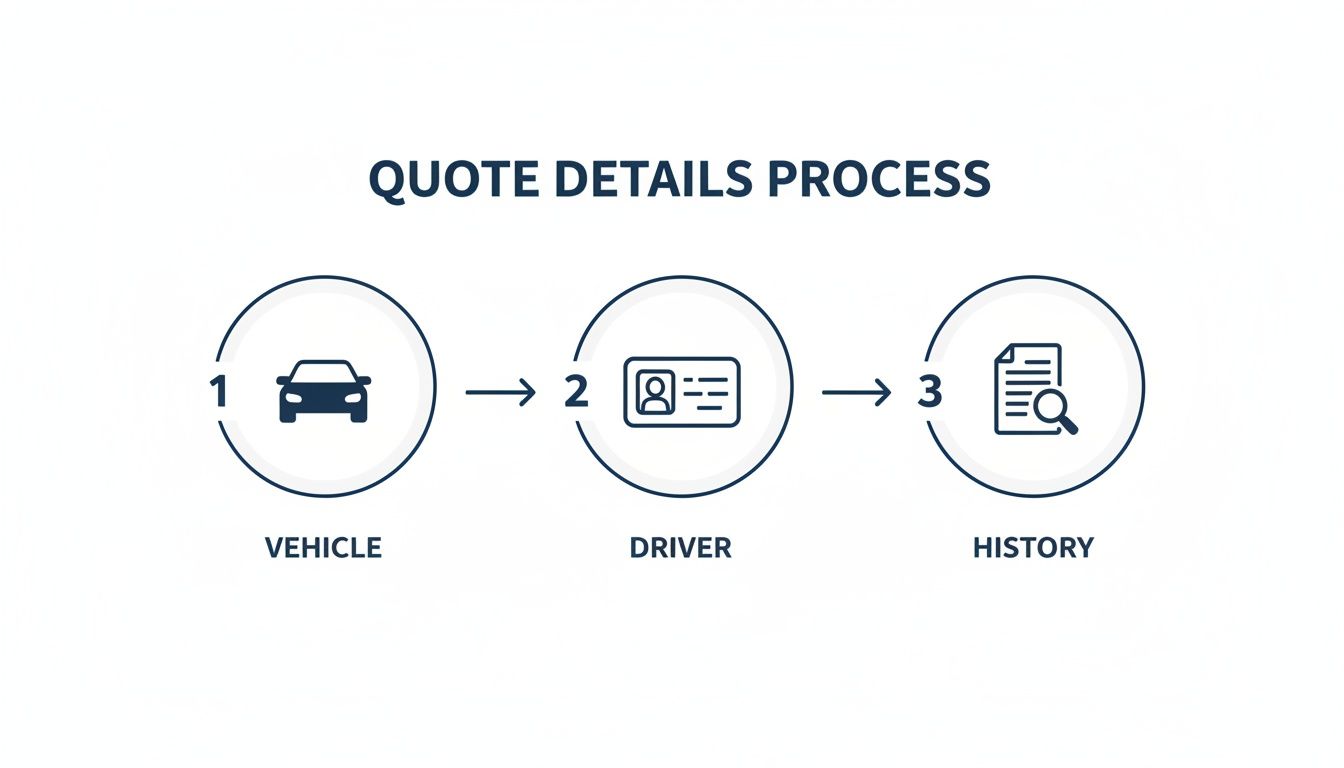
As the infographic shows, a solid quote is always built on these three pillars of information, which is how insurers calculate their risk.
Looking Beyond the Headline Price
When that list of quotes pops up, ignore the initial prices for a moment. Instead, open up the policy documents for your top five contenders. This is where you’ll find the crucial variables that determine the quality of the cover and its real-world cost if you ever have to make a claim.
Pay close attention to these key areas:
- Compulsory and Voluntary Excess: This is the slice of the claim you have to pay yourself. A cheap premium often hides a painfully high compulsory excess, so always check the total figure you’d be liable for.
- No-Claims Discount Protection: Is this baked into the policy or an optional extra you have to pay for? Losing years of no-claims bonus after one small incident can make your future premiums skyrocket.
- Courtesy Car Provision: Dig into the terms here. Some policies will only give you a basic runaround if your car is being repaired at an approved garage—not if it's written off completely. That's a huge difference.
- Legal Cover: Often an add-on but it can be worth its weight in gold for recovering uninsured losses (like your excess) if you're in an accident that wasn’t your fault.
The Multi-Site and Direct Insurer Strategy
A classic mistake is running a search on one comparison site and thinking you’ve seen the whole market. You haven’t. Different sites often have exclusive deals with certain insurers, which means the results and prices can vary quite a bit. To do a proper search, you really need to check at least two or three different comparison websites.
The savviest shoppers know the search doesn't end with comparison sites. Some of the UK's biggest insurers do not list their products on these platforms at all, forcing you to go to them directly for a quote.
Going direct versus using a comparison site each has its place. Understanding the difference helps you build a smarter search strategy.
Comparing Online Insurance Channels
| Channel Type | Advantages | Disadvantages |
|---|---|---|
| Comparison Websites | - Quickly compare dozens of quotes at once. - Discover insurers you may not have heard of. - Easy to tweak details and see price changes instantly. |
- Not all insurers are listed. - The initial price might change on the insurer's site. - Can encourage focusing purely on price over policy quality. |
| Direct Insurers | - Access to exclusive policies not on comparison sites. - Potential for better deals or multi-policy discounts. - Deal directly with the insurer from the start. |
- Much more time-consuming to get individual quotes. - Harder to compare policies on a like-for-like basis. - You might miss out on a better deal elsewhere. |
Ultimately, a mix of both is the winning formula.
Finally, always finish your search by visiting the websites of direct-only insurers. Big names like Direct Line and Aviva deliberately stay off the aggregator sites. Taking this last step ensures you've genuinely scoured the market and gives you the peace of mind that you’ve found the best possible deal for your circumstances. This diligence is what separates a quick search from a smart purchase.
Understanding How Insurance Fraud Affects Your Premiums
It’s easy to think insurance fraud is a victimless crime that only hurts massive, faceless corporations. But the reality is, it’s a costly problem that hits every single honest driver right where it hurts—their premiums.
When someone lies to get a cheaper quote or inflates a claim after an accident, the financial damage doesn't just disappear. It gets spread across the entire pool of policyholders. The total pot of money paid out for claims directly influences what we all pay for cover next year.
In the UK, the costs of fraudulent activity are ultimately passed on to over 44 million policyholders. This is precisely why being upfront with provable information is so critical when you're looking for car insurance online. Your honesty doesn’t just get you valid cover; it helps keep the market fair and more affordable for everyone.
The Real Impact of Small Untruths
Let’s be honest, the temptation to tell a little ‘white lie’ on an application is real. Maybe you shave a few thousand miles off your annual estimate or say your car is tucked away in a garage when it’s actually parked on the street. It might seem like a harmless fib to save a few quid.
Insurers, however, don’t see it that way. To them, these aren’t minor tweaks; they’re material misrepresentations.
These details are the bedrock of how they calculate your risk profile. Insurers now use sophisticated data analytics and powerful validation tools to cross-reference the information you give them. A small discrepancy can trigger a fraud alert. For instance, if you claim to be the main driver to get a cheaper rate for your newly-licensed teenager but telematics data or a claim investigation proves otherwise, your policy could be voided on the spot.
When you apply for car insurance online, you’re entering a legal agreement based on the principle of 'utmost good faith'. Any deliberate falsehood, no matter how small, shatters that trust and can leave you completely uninsured when you need it most.
Sophisticated Detection and Severe Consequences
Insurers are no longer just taking your word for it. They now have a formidable arsenal of tools to sniff out and stop fraud. They check public records, comb through social media and use shared industry databases that are brilliant at flagging suspicious patterns. Organised scams, like 'ghost broking' where fraudsters sell completely fake policies online, are actively hunted by industry-wide task forces.
Getting caught comes with consequences far more serious than just having your policy cancelled. If an insurer proves you’ve acted fraudulently, you could be facing:
- A Refused Claim: This is the most immediate blow. The insurer won't pay out a penny, leaving you to cover all the costs yourself, which could run into thousands.
- A Criminal Record: Insurance fraud is a criminal offence. It can lead to prosecution, hefty fines and even a prison sentence.
- Difficulty Getting Future Cover: You’ll be blacklisted on industry fraud prevention databases. This makes getting insurance in the future incredibly difficult and eye-wateringly expensive.
Ultimately, the integrity of what you share when searching for car insurance online is everything. You can learn much more about how to protect yourself by reading our guide on spotting scams and proving false claims. By understanding the true cost of fraud, you can make sure your policy is built on a foundation of truth, protecting you when it matters.
Finalising Your Purchase and Verifying Your Policy
You’ve done the hard work of comparing quotes and have landed on a policy that feels right. But hold on – you're not quite at the finish line yet. The final steps are arguably the most important as they’re all about making sure the cover you’ve chosen is accurate, legitimate and legally sound.
This is the point where you decide how to pay. Most insurers will offer a single annual payment or the option to spread the cost with monthly direct debits. While paying monthly feels lighter on the wallet, it nearly always comes with interest charges, so be sure to check the total cost. Remember, you also have a statutory 14-day cooling-off period to cancel the policy for any reason, no questions asked.
Verifying Every Single Detail
Once you've paid, your first job is to verify everything. Don’t just file the documents away and assume it’s all correct. This is your last chance to spot any errors that could cause a massive headache later on.
Think of it this way: if the details on your policy don't perfectly match the facts, an insurer could argue you misrepresented your risk.
An insurance policy is a legal contract built on the information you provided. A small, unchecked error in your policy documents could be the difference between a claim being paid quickly or being rejected entirely.
You need to meticulously read through your policy schedule and statement of fact. Confirm every detail is 100% correct , from your name and address to the vehicle’s registration number and any declared modifications. When you finalise your policy, it's also essential to grasp important terms such as the concept of no-fault insurance in Ontario if you're in Canada or specific clauses relevant to the UK.
Checking the Motor Insurance Database
Finally, it’s time for the official check. Your new insurance details must appear on the Motor Insurance Database (MID) , which is the central record used by the police and DVLA to confirm who is and isn't insured.
It can take a few days for the database to update but it’s crucial that you check it. This is your proof that your car is officially and legally shown as insured on UK roads.
The online comparison work you did was vital, especially since market fluctuations can cause premiums to shift dramatically. Verifying your final policy details is the last piece of the puzzle, ensuring those hard-won savings aren’t compromised by simple inaccuracies that could prove incredibly costly later on. Taking these final steps gives you the peace of mind that your cover is solid and you're ready to hit the road.
Still Have Questions About Buying Car Insurance Online?
Jumping into the world of online car insurance can feel like a maze, even with all the guides and comparison tools. It’s totally normal to have a few lingering questions before you hit that ‘buy’ button.
Let's clear up some of the most common queries UK drivers have. The goal is to get you feeling confident you’re making the right choice.
Is Buying Car Insurance Online Really Cheaper?
For most people, the answer is a big yes. Comparison sites are incredibly competitive arenas where insurers fight for your business and that naturally drives down prices. Plus, selling policies online means less admin for them and those savings often get passed on to you.
But here’s a tip from experience: don’t assume the absolute best deal is always on a comparison site. Some of the UK's biggest insurers, like Direct Line, don't list their products on these platforms at all. To be 100% sure you've snagged the best price, it's always worth grabbing a couple of direct quotes as your final check.
How Do I Know an Online Insurer Isn't a Scam?
This is a really important question, especially with the rise of convincing-looking fake websites.
The single best thing you can do is check if the insurer or broker is authorised and regulated by the Financial Conduct Authority (FCA) .
It's simple: just search for the company’s name on the official FCA Register. Any legitimate firm will have its FCA registration number proudly displayed on its website, usually tucked away in the footer. Be extra cautious of deals that seem too good to be true, particularly those you see advertised on social media. These are prime hunting grounds for fraudulent ‘ghost brokers’ selling completely worthless policies.
Your insurance policy is only as good as the company that underwrites it. Taking five minutes to check the FCA Register is the most effective way to protect yourself from fraud and ensure you are buying a genuine, regulated product.
What Happens If I Make a Mistake on My Application?
Even a small, honest mistake on your application can cause big problems down the line. If an insurer finds out you misrepresented something when you go to make a claim, they could refuse to pay out or even void your policy entirely.
If you spot an error after you've bought your cover, contact your insurer immediately to get it corrected. They’ll process what’s called a ‘mid-term adjustment’. Yes, this might come with a small admin fee and your premium could go up or down but the crucial thing is that your policy remains valid and correct.
It's always better to own up to a mistake yourself. It shows you’re acting in good faith and keeps the legal contract between you and the insurer accurate. The alternative—an insurer discovering the error during a claim investigation—could leave you uninsured and facing a massive bill. A few extra minutes spent double-checking your details from the start is the best way to avoid this whole mess.
At Proova , we believe in the power of provable information to make insurance fairer and more efficient for everyone. Our platform helps you document your assets securely, ensuring that if you ever need to make a claim, the process is fast, transparent and free of disputes. Learn more about how we're building trust in the insurance industry at https://www.proova.com.