Demystifying the 10 Different Types of Car Insurance in the UK for 2025
Choosing the right car insurance can feel like a daunting task. With a myriad of policies available, understanding what each one covers is crucial not just for your protection but for the financial health of the entire insurance ecosystem. This guide breaks down the different types of car insurance available in the UK, moving beyond simple definitions to offer practical insights for claims professionals and insurers. We will explore what each policy entails, who it is for and critically, how fraudulent claims impact every policyholder.
The cost of insurance fraud is not just a problem for insurers; it is a multi-billion-pound issue that inflates premiums for all honest drivers. This article examines the specific fraud risks associated with each policy type and explores how they are underwritten. For those looking to delve deeper into the general structure and dynamics of the overall insurance industry, further resources are available.
We will also investigate how innovative solutions like Proova are empowering both insurers and customers to verify assets and streamline legitimate claims. By focusing on the provability of claims, we can create a more transparent, cost-effective system. This listicle provides actionable intelligence for claims managers, adjusters and fraud prevention specialists navigating the complexities of modern motor insurance.
1. Third-Party Only (TPO) Insurance
Third-Party Only (TPO) is the most fundamental level of car insurance legally required for drivers in the United Kingdom. It is designed to protect other people from the financial consequences of an accident you cause. This policy covers liability for injuries to third parties (including your passengers) and damage to their vehicles or property.
Crucially, TPO offers no financial protection for your own vehicle or your own injuries if you are deemed at fault for an incident. This makes it a high-risk option, often chosen by drivers of older, lower-value cars where the cost of comprehensive cover might outweigh the vehicle's worth.
Common Claims and Fraud Risks
TPO claims exclusively involve outgoing payments to third parties. A typical scenario is a TPO-insured driver rear-ending another car at a junction. Their insurer would handle the repairs for the third-party vehicle and any associated injury claims.
However, this policy type is susceptible to specific fraud schemes:
- Exaggerated Third-Party Claims: Since the policyholder's own vehicle damage is irrelevant, fraudulent third parties may inflate repair costs or invent personal injuries, knowing the TPO insurer has limited visibility into the actual incident.
- "Ghost" Accidents: Staged accidents where a claimant alleges a TPO driver hit them can be difficult to disprove, especially with limited evidence from the insured party.
Proova's Role: In TPO claims, verifying the third party's damage is paramount. Proova's platform allows insurers to quickly validate the legitimacy and scale of third-party repair estimates and itemised invoices. By using AI to cross-reference claimed damage against market rates and historical data, Proova can flag inflated costs, helping to control third-party claim expenditure and combat fraud effectively. This ensures fair payouts and protects the insurer from unwarranted losses.
2. Collision Insurance
Collision insurance is a specific type of car insurance that covers the cost of repairing or replacing your own vehicle after an accident with another object, such as a car or a stationary item like a lamppost or a wall. Unlike third-party cover, it pays out regardless of who was at fault but you will be required to pay a pre-agreed excess towards the claim.
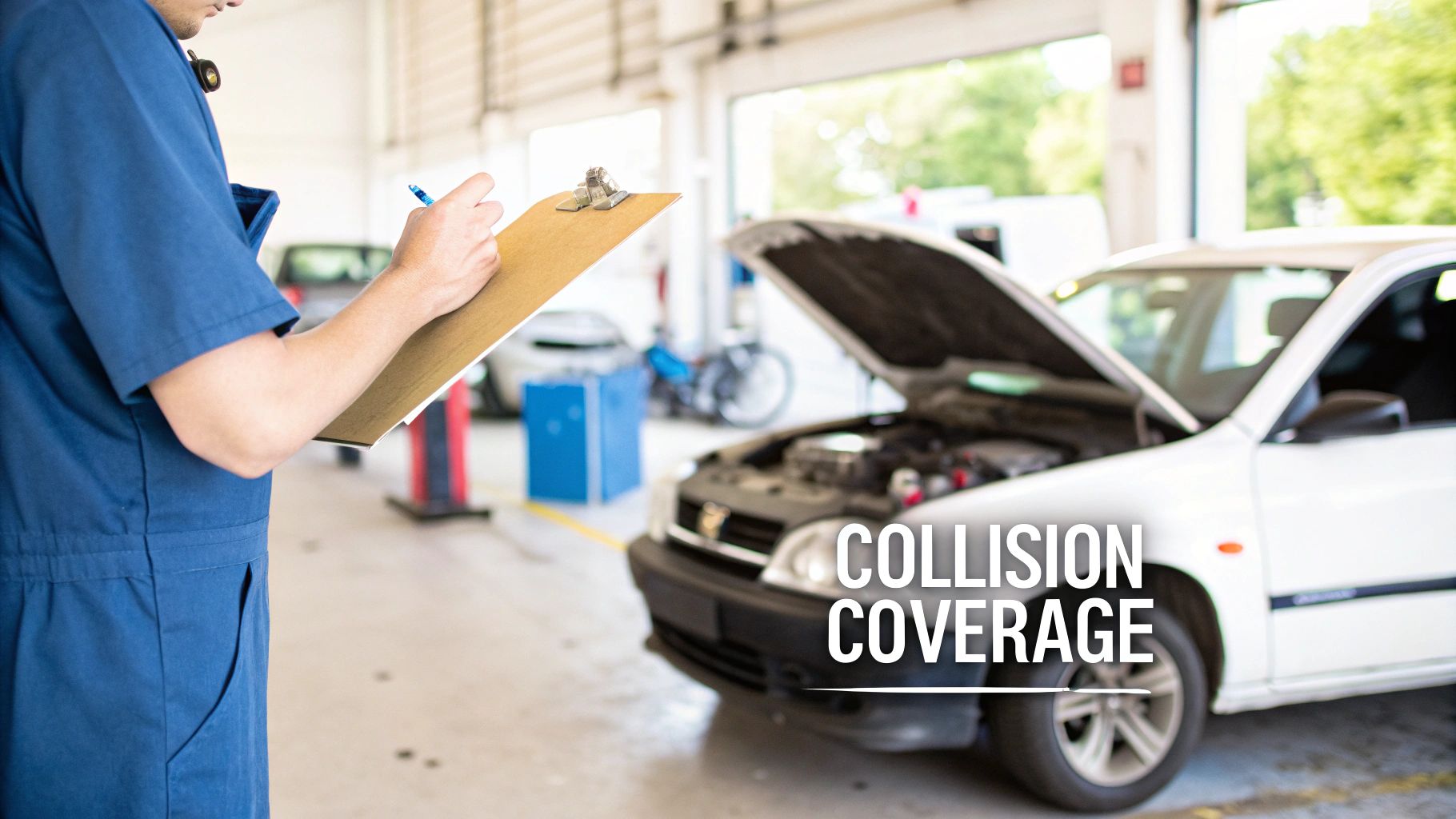
This cover is a vital component for drivers of newer or higher-value vehicles and it is almost always a mandatory requirement for cars on finance or lease agreements. If your vehicle is badly damaged, this policy can prevent a significant financial loss. In cases where the repair costs exceed the car's value, it may be declared a total loss.
Common Claims and Fraud Risks
A typical collision claim involves a single-vehicle incident, such as a driver sliding on ice and hitting a barrier, or a multi-vehicle accident where the policyholder is at fault. In both scenarios, their insurer covers the repairs to their own car.
However, collision policies are exposed to first-party fraud risks:
- Pre-existing Damage: Policyholders may attempt to include old, unrelated damage in a claim for a new incident, hoping the insurer will cover all repairs.
- Fabricated Incidents: A driver might intentionally damage their vehicle and claim it was an accidental collision to secure a payout, particularly if they cannot afford necessary repairs.
Proova's Role: For collision claims, Proova provides an essential layer of verification. Its AI-powered platform analyses repair invoices and photographic evidence to detect inconsistencies, such as damage that does not match the described incident or inflated repair costs from a garage. By itemising and validating every part of the repair estimate, Proova helps insurers prevent fraudulent payouts for pre-existing damage and ensures that the claim costs are accurate, protecting both the insurer and the wider pool of policyholders from the financial impact of fraud.
3. Comprehensive Insurance
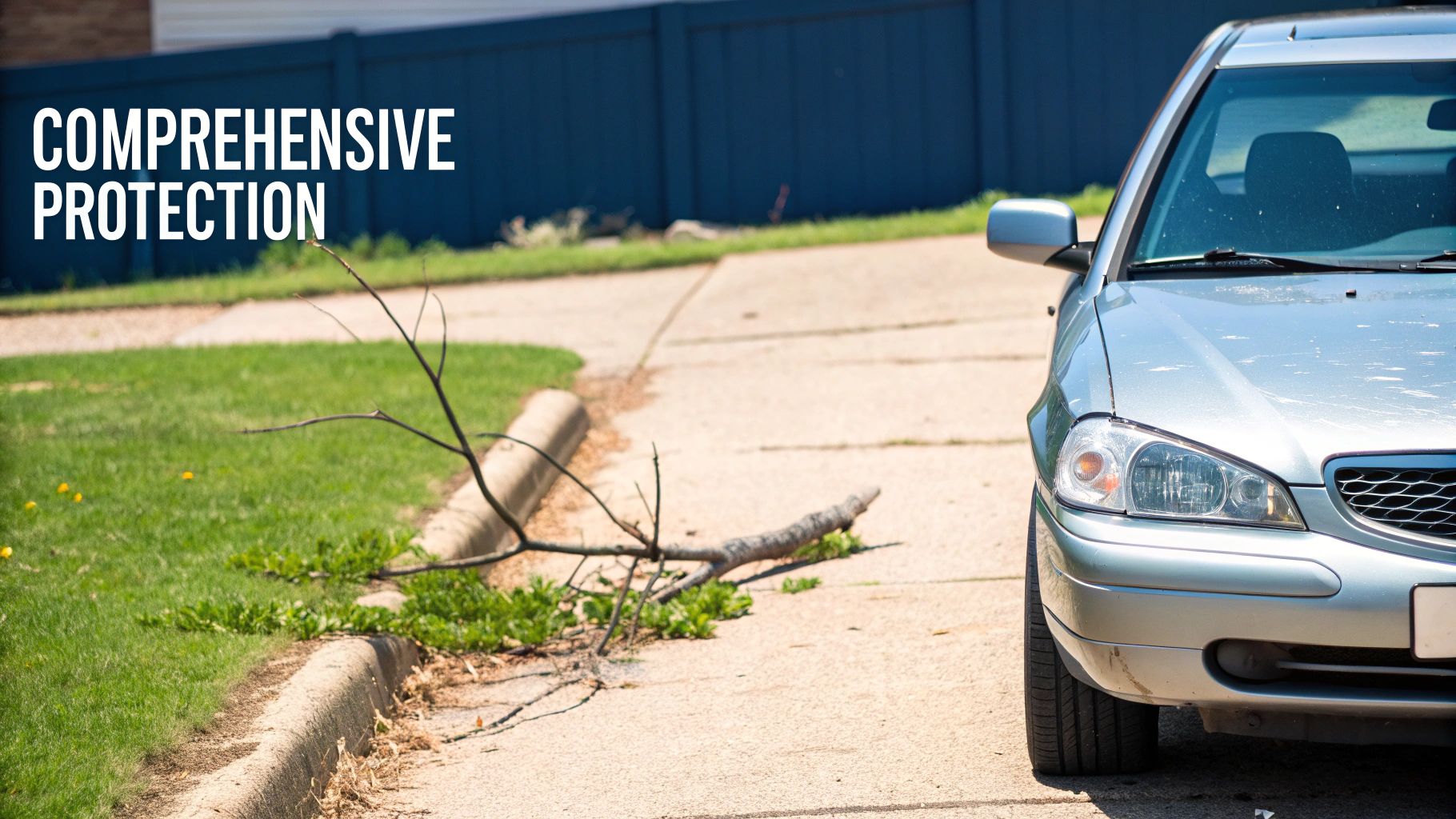
Comprehensive insurance, often sold alongside collision cover, is one of the most extensive types of car insurance available. It is designed to cover financial losses from damage to your own vehicle caused by incidents other than a collision with another car. This includes a wide range of perils such as theft, vandalism, fire, weather events like floods or hail, animal strikes and falling objects.
Because it protects the vehicle's value against a broad spectrum of non-collision risks, comprehensive cover is nearly always required by lenders for vehicles on finance or lease agreements. It provides peace of mind that the asset is protected from unforeseen events beyond the driver's control.
Common Claims and Fraud Risks
Typical comprehensive claims include repairing a windscreen cracked by a stone, paying out for a stolen vehicle or fixing bodywork damage after hitting a deer. Unlike liability cover, these claims are made by the policyholder for their own loss.
This first-party relationship introduces specific fraud risks that insurers must manage:
- Pre-existing Damage: A policyholder might claim for pre-existing scratches, dents or rust under the guise of a new incident, such as a vandalism event or storm damage.
- Exaggerated Damage: Following a genuine incident, such as a tree branch falling on a car, the policyholder may inflate the extent of the damage to secure a larger payout or get unrelated repairs done.
Proova's Role: Proova's technology is crucial for validating the authenticity of comprehensive claims. By requiring policyholders to provide timestamped, geolocated evidence of the damage via the platform, Proova helps insurers verify that the damage occurred when and where it was reported. Its AI can analyse submitted images and videos to detect signs of pre-existing damage and cross-reference repair estimates against industry data to flag inflated costs. This verification process deters opportunistic fraud and ensures claims are settled accurately and quickly.
4. Uninsured/Underinsured Motorist Insurance (UM/UIM)
Uninsured/Underinsured Motorist (UM/UIM) insurance is a crucial add-on designed to protect you financially if you are involved in an accident with a driver who has no insurance or insufficient cover. Uninsured Motorist (UM) protection steps in when the at-fault driver is illegally uninsured or cannot be traced, such as in a hit-and-run incident. Underinsured Motorist (UIM) cover applies when the at-fault driver has insurance but their liability limits are too low to cover the full extent of your medical bills or vehicle repairs.
This type of cover essentially fills a dangerous gap, ensuring that you are not left with significant personal expenses due to another driver's lack of responsibility. While not a legal requirement in the UK, it is a vital component of a fully comprehensive policy, acting as a personal safety net against irresponsible road users.
Common Claims and Fraud Risks
A typical UM claim involves an insured driver being hit by an uninsured third party. The policyholder's own insurer would then cover their injuries and vehicle damage, pursuing recovery from the at-fault party where possible. A UIM claim might arise if an at-fault driver has a basic £20,000 liability limit but causes £50,000 in damages; the UIM policy would cover the remaining £30,000.
However, UM/UIM policies are targeted by specific fraudulent activities:
- Phantom Passenger Claims: A driver involved in a genuine accident with an uninsured motorist may add non-existent or uninjured "passengers" to the claim to maximise personal injury payouts.
- Fabricated Hit-and-Run: A policyholder might damage their own vehicle and then falsely claim it was a hit-and-run to access their UM cover, avoiding a fault claim and potential premium increases.
Proova's Role: In UM/UIM claims, confirming the legitimacy of the incident and the claimed damages is critical. Proova's AI-driven platform can analyse submitted evidence, such as photos of vehicle damage or repair invoices, to detect inconsistencies. By cross-referencing damage patterns with the reported accident details and flagging exaggerated repair costs, Proova helps insurers validate genuine claims quickly while identifying tell-tale signs of fraud like staged hit-and-runs or inflated personal injury claims, thereby protecting the integrity of the claims process.
5. Medical Payments Coverage (MedPay)
Medical Payments Coverage, often known as MedPay, is a supplementary insurance type designed to cover medical expenses for you and your passengers following a car accident, irrespective of who was at fault. It functions as a first line of financial support for costs such as hospital visits, ambulance services, dental work and rehabilitation, often paying out faster than a standard health insurance policy.
This coverage acts as an immediate financial safety net, providing peace of mind by ensuring medical bills can be addressed without delay. It is particularly valuable for policyholders with high-deductible health plans or for those who frequently travel with passengers, as it extends protection to everyone in the vehicle at the time of an incident.
Common Claims and Fraud Risks
A typical MedPay claim involves a driver or passenger seeking reimbursement for immediate medical costs after an accident, such as an emergency room visit or initial consultation fees. The insurer pays these expenses up to the coverage limit, helping to prevent financial hardship while liability is being determined or other insurance claims are processed.
However, MedPay is vulnerable to opportunistic fraud, particularly through inflated or fabricated medical claims:
- Inflated Medical Invoices: Unscrupulous clinics may bill for treatments that were not provided or exaggerate the cost of services rendered, knowing the insurer is obligated to pay reasonable medical costs.
- Staged Passenger Injuries: In organised fraud rings, individuals may claim to be passengers in an accident and seek MedPay benefits for non-existent or pre-existing injuries.
Proova's Role: Proova's technology is crucial for validating MedPay claims by meticulously itemising and verifying medical invoices. By cross-referencing submitted bills against standard medical coding and regional cost databases, our platform can instantly flag discrepancies, duplicate charges and inflated prices. This empowers insurers to challenge fraudulent medical billing with concrete data, ensuring that legitimate injury claims are paid swiftly while protecting the policy from systemic abuse and unnecessary cost escalation.
6. Uninsured Motorist Property Damage (UMPD)
Uninsured Motorist Property Damage (UMPD) is a specific type of car insurance add-on that covers the cost of repairing or replacing your vehicle if it is damaged by a driver who has no insurance. It is distinct from standard collision cover and is typically only available in certain regions or jurisdictions where it is mandated or offered as an optional extra. This cover activates when the at-fault driver is identified but cannot pay for the damages they have caused.
UMPD is designed to fill a critical gap, protecting policyholders from bearing the full financial burden of repairs through no fault of their own. It often has a lower excess than a standard collision policy, making it a cost-effective solution for incidents involving uninsured drivers. Without it, your only options would be to pay for the damages yourself or make a claim on your own collision policy, which could impact your no-claims bonus and involve a higher excess.
Common Claims and Fraud Risks
A typical UMPD claim involves a policyholder being hit by an uninsured driver who is clearly at fault. For example, if an uninsured vehicle runs a red light and collides with your car, causing significant damage, your UMPD cover would pay for your vehicle's repairs. This prevents you from having to absorb the cost directly or claim against your more expensive collision policy.
However, this cover is not without its fraud risks, primarily related to claim fabrication:
- Phantom Driver Claims: A policyholder might damage their own vehicle in a single-vehicle accident and then falsely report that an unidentified, uninsured driver hit them and fled the scene to access the UMPD cover, often to avoid paying a higher collision excess.
- Damage Inflation: In a legitimate claim, a policyholder might collude with a repair shop to inflate the cost of repairs, knowing the insurer has no at-fault third-party insurer to scrutinise the claim against.
Proova's Role: Proova’s technology is instrumental in mitigating UMPD fraud by providing objective, AI-driven validation of the claim evidence. When a policyholder submits photos or videos of the damage, Proova can analyse the impact points and compare them to the described incident, flagging inconsistencies that might suggest a phantom driver scenario. The platform also itemises and verifies repair invoices against market data, ensuring that costs are fair and preventing fraudulent inflation. This protects insurers from paying for fabricated or exaggerated UMPD claims.
7. Gap Insurance
Guaranteed Asset Protection (Gap) insurance is a supplementary policy designed to cover the financial shortfall between the amount you owe on a car finance agreement and the vehicle's actual cash value (ACV) if it is declared a total loss. When a car is written off, a standard comprehensive policy pays out its current market value, which due to depreciation is often less than the outstanding finance balance.
Gap insurance bridges this monetary "gap," ensuring you are not left paying off a loan for a car you no longer own. This type of car insurance is particularly relevant for new vehicles, which depreciate fastest, or for those with long-term finance deals or small initial deposits. It protects the policyholder from significant out-of-pocket expenses following a total loss claim.
Common Claims and Fraud Risks
A typical Gap insurance claim is triggered after a comprehensive policy pays out for a stolen or written-off vehicle. For example, if a driver owes £15,000 on their finance agreement but their car's ACV is only £12,000, Gap insurance would cover the £3,000 difference.
This area is not immune to fraudulent activity, which can manifest in several ways:
- Vehicle Value Inflation: A policyholder might collude with a third party to inflate the pre-accident value of the vehicle to maximise the overall payout from both the primary insurer and the Gap provider.
- Concealing Pre-existing Damage: Failing to disclose significant pre-existing damage can lead to an inflated ACV valuation, creating a larger, fraudulent gap for the policy to cover.
Proova's Role: In Gap claims, the accuracy of the primary insurer's total loss valuation is critical. Proova's platform can independently verify the ACV assessment by analysing the vehicle's condition, market data and repair estimates prior to the incident. By ensuring the initial payout is accurate and defensible, Proova helps Gap insurers confirm the legitimacy of the claimed shortfall. This prevents overpayments based on inflated valuations and provides a transparent, data-driven foundation for settling the claim fairly and efficiently.
8. Personal Umbrella Insurance
Personal Umbrella Insurance offers an additional layer of liability protection that extends beyond the standard limits of a primary car insurance policy. It is designed as a financial safety net, kicking in when the costs from a major at-fault accident exceed the maximum payout of your underlying auto cover. For instance, if a severe accident results in £500,000 of damages and your car insurance only covers £250,000, the umbrella policy would cover the remaining £250,000.
This type of cover is particularly important for individuals with significant assets to protect, as it shields them from potentially devastating legal and medical expenses. While it is a separate policy, it works in tandem with existing motor and home insurance, activating only after those primary policy limits have been exhausted. Find out more with our guide to UK insurance umbrella policies.
Common Claims and Fraud Risks
Claims under an umbrella policy are infrequent but are always for high-value, catastrophic events. A typical claim involves a multi-vehicle pile-up caused by the policyholder, leading to severe injuries and extensive property damage that quickly surpasses standard liability limits.
The high values involved make these claims a target for sophisticated fraud:
- Grossly Inflated Liability Claims: In a legitimate but severe accident, third parties may collude with medical or legal professionals to grossly exaggerate injury severity and long-term care costs, aiming to maximise the payout from the deep pockets of an umbrella policy.
- Staged Catastrophic Events: Although complex to orchestrate, organised fraudsters may stage severe accidents, knowing the presence of an umbrella policy promises a substantial payday.
Proova's Role: For high-stakes umbrella claims, validating every component of the underlying third-party claim is critical. Proova's AI-driven platform can meticulously analyse and itemise complex repair invoices, medical bills and other associated costs from the primary claim. By scrutinising each line item for legitimacy and fair market value, Proova helps insurers verify the foundational costs before the umbrella policy is triggered. This granular verification prevents the payment of fraudulent or inflated amounts, protecting both the insurer and the policyholder from major financial losses.
9. Rental Reimbursement Coverage
Rental Reimbursement Coverage, often offered as an optional add-on to comprehensive or collision policies, is designed to minimise disruption after a claim. It covers the cost of a hire car while the policyholder's own vehicle is being repaired following a covered incident, such as an accident, fire or theft. This ensures the insured remains mobile without incurring significant out-of-pocket expenses for alternative transport.
This type of cover typically comes with specified daily and total limits. For example, a policy might cover up to £30 per day for a maximum of 30 days or a total of £900. It is a practical and relatively low-cost addition that provides significant value when a vehicle is out of action for an extended period, which is common for major repairs.
Common Claims and Fraud Risks
A typical claim involves a policyholder whose car is in the garage for a week following a collision. The insurer would reimburse the cost of their hire car up to the daily limit for that seven-day period.
However, this straightforward benefit can be exploited through fraudulent activities:
- Extended Rental Periods: Claimants or unscrupulous repair shops may intentionally delay repairs to extend the hire period, maximising the payout from the insurer.
- Inflated Invoices: Policyholders might submit invoices from hire companies for premium vehicles or at rates far exceeding their policy's daily limit, hoping the insurer will not scrutinise the details.
Proova's Role: For rental reimbursement claims, proving the legitimacy and necessity of the hire period is crucial. Proova's platform can validate the repair timeline by itemising the necessary repair work and cross-referencing it with standard industry repair durations. This allows insurers to identify unjustified delays and challenge claims for extended hire periods. By digitising and verifying hire car invoices, Proova also flags inflated daily rates, ensuring reimbursements are fair and align with policy limits, thus preventing fraudulent overpayments.
10. Roadside Assistance Coverage
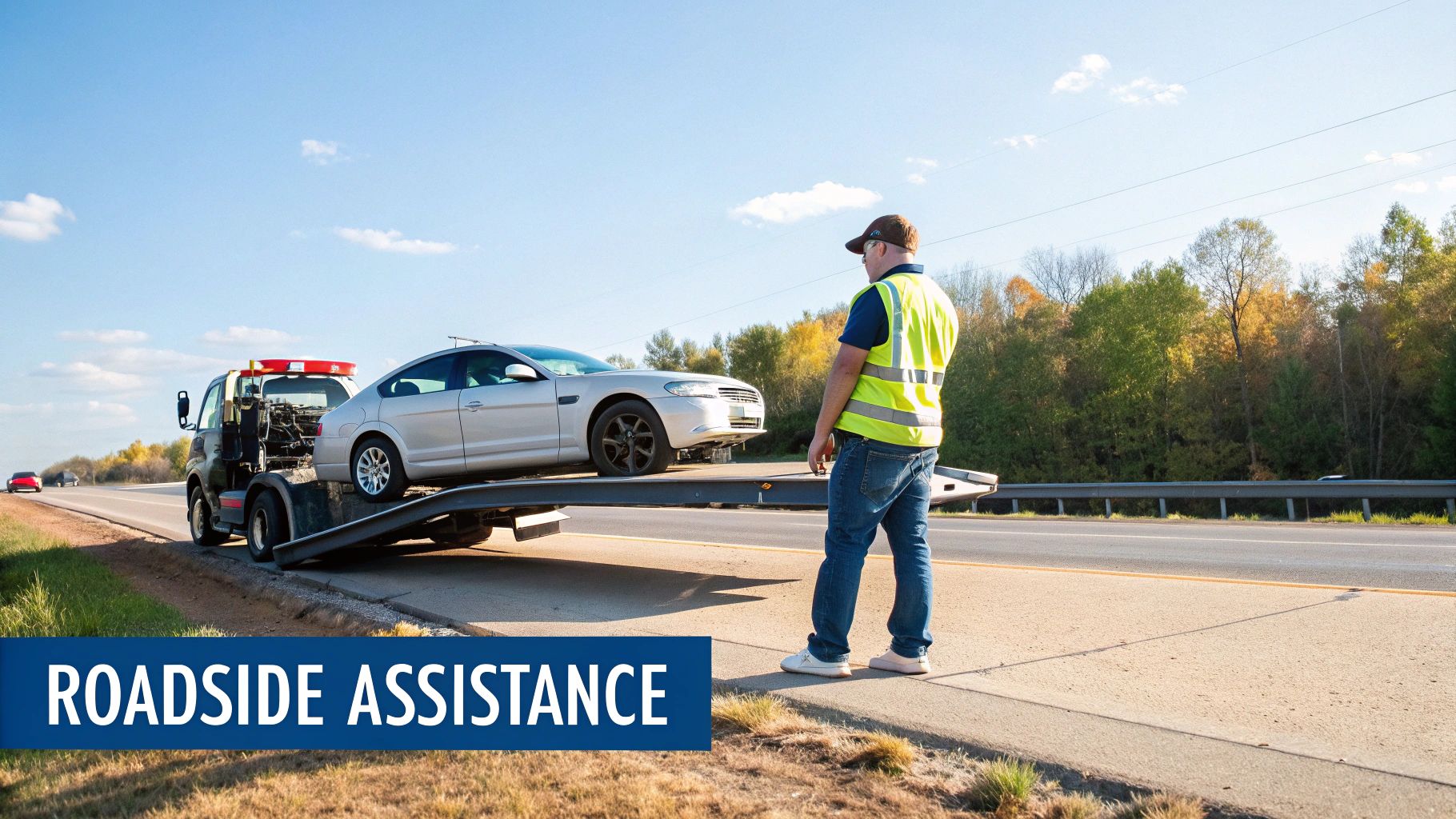
Roadside Assistance Coverage, often sold as an add-on or a standalone policy, provides emergency services to drivers whose vehicles have broken down or become immobilised. This type of cover is designed to offer peace of mind by ensuring professional help, such as towing, tyre changes, fuel delivery or jump-starts, is available 24/7 if you are stranded.
It is particularly popular with drivers of older vehicles, those who travel long distances or anyone who wants to avoid the high cost and stress of an unexpected breakdown. The policy ensures a network of approved service providers is ready to be dispatched, minimising your time spent on the roadside. You can learn more about car breakdown cover in the UK and how to choose the right policy.
Common Claims and Fraud Risks
Typical claims involve straightforward service dispatches: a tow truck for a car that will not start, a technician to change a flat tyre or a locksmith for keys locked inside the vehicle. The insurer pays the service provider directly, often up to a specified limit.
However, fraudulent activity can arise, impacting costs for insurers and policyholders:
- Service Invoice Inflation: A dishonest service provider might bill the insurer for a more expensive service than what was provided, such as charging for a complex tow when only a simple jump-start was needed.
- Phantom Services: In some cases, a provider may bill for a service that was never rendered, colluding with a policyholder or exploiting a gap in verification processes.
Proova's Role: Proova's technology is critical for verifying the legitimacy of service provider invoices in roadside assistance claims. The platform can instantly digitise and analyse submitted invoices for services like towing, repairs or part replacements. By cross-referencing costs against industry benchmarks and identifying anomalies or duplicate charges, Proova helps insurers ensure they are only paying for genuine, fairly priced services. This protects against invoice padding and phantom service fraud, maintaining the affordability of this valuable cover.
10 Car Insurance Types Comparison
| Coverage Type | Implementation Complexity 🔄 | Resource Requirements ⚡ | Expected Outcomes ⭐📊 | Ideal Use Cases | Key Advantages 💡 |
|---|---|---|---|---|---|
| Liability Insurance | 🔄 Low — standard policy setup | ⚡ Low cost; meets state minimums | ⭐⭐ — covers third‑party injury/property; 📊 reduces legal/financial exposure | Meeting legal requirements; basic asset protection | 💡 Affordable, legally required, includes legal defense |
| Collision Insurance | 🔄 Moderate — deductible selection; repair claims | ⚡ Moderate premiums; deductible per claim; often lender‑required | ⭐⭐ — pays for own‑vehicle collision repairs; 📊 lowers OOP repair costs | Financed/leased or newer vehicles; frequent drivers | 💡 Covers vehicle damage regardless of fault |
| Comprehensive Insurance | 🔄 Moderate — review exclusions for many perils | ⚡ Moderate–high premiums; deductible applies | ⭐⭐ — covers theft/weather/vandalism; 📊 protects vehicle value | High‑value cars; areas with severe weather or theft | 💡 Broad non‑collision protection (theft, hail, animals) |
| Uninsured/Underinsured Motorist (UM/UIM) | 🔄 Moderate — state rules and claim docs vary | ⚡ Low cost add‑on; choose limits to match liability | ⭐⭐ — fills gaps vs uninsured/uninsured at‑fault drivers; 📊 protects medical/repair costs | Areas with many uninsured drivers; hit‑and‑run risk | 💡 Protects against drivers lacking sufficient coverage |
| Medical Payments (MedPay / PIP) | 🔄 Low — straightforward coordination with health plans | ⚡ Low premium; limits usually $1k–$10k; no deductible | ⭐ — immediate medical expense coverage; 📊 reduces short‑term OOP medical bills | Drivers/passengers with high health deductibles or limited coverage | 💡 Fast payment, applies regardless of fault, covers occupants |
| Uninsured Motorist Property Damage (UMPD) | 🔄 Low–Moderate — limited to certain states | ⚡ Low cost; deductible options; state availability varies | ⭐ — covers vehicle damage from uninsured drivers; 📊 reduces repair OOP | Drivers in states offering UMPD; concerned about uninsured at‑fault drivers | 💡 Often cheaper than collision for uninsured‑driver damage |
| Gap Insurance | 🔄 Low — add‑on at point of sale; total‑loss only | ⚡ Low–moderate cost ($10–$25/month or one‑time fee) | ⭐⭐ — covers ACV vs loan shortfall on total loss; 📊 prevents leftover loan debt | New/leased or high‑LTV financed vehicles | 💡 Protects from owing after total loss; ideal early in loan term |
| Personal Umbrella Insurance | 🔄 Moderate — requires adequate underlying limits | ⚡ Cost‑effective per dollar ($150–$300/year) for high limits | ⭐⭐⭐ — large excess liability; 📊 shields personal assets from major judgments | High‑net‑worth individuals, professionals, business owners | 💡 Extends liability across auto/home; high coverage cheaply |
| Rental Reimbursement Coverage | 🔄 Low — select daily and aggregate limits | ⚡ Very low cost add‑on ($10–$30/year) | ⭐ — pays rental during covered repairs; 📊 minimizes transport disruption | Those without alternate transport; cars undergoing frequent repairs | 💡 Keeps you mobile, affordable, simple to use |
| Roadside Assistance Coverage | 🔄 Low — service enrollment; provider network | ⚡ Very low monthly cost ($5–$15/month) | ⭐ — 24/7 emergency services; 📊 reduces stranded/time costs | Frequent travelers, older vehicles, remote driving | 💡 Towing, lockout, fuel delivery and on‑site help nationwide |
Making an Informed Choice: Your Policy, Your Protection, Our Shared Cost
Navigating the landscape of car insurance can seem complex but understanding the different types of car insurance is the first, most crucial step towards securing the right protection. Throughout this guide, we have explored the distinct roles of everything from foundational Third Party Liability cover to specialised options like Gap Insurance and Uninsured Motorist Protection. Each policy type serves a unique purpose, designed to shield you from specific financial risks whether you are at fault in a collision, a victim of theft or facing a claim from an uninsured driver.
The ultimate goal is to construct a policy that is not just a legal requirement but a robust financial safety net tailored to your vehicle, your driving habits and your personal risk tolerance. Choosing the right combination of coverages means balancing adequate protection with affordable premiums. This requires a clear-eyed assessment of your needs. Do you have a new car on finance? Gap insurance is essential. Do you rely on your vehicle for your daily commute? Rental reimbursement could be a lifeline.
From Individual Choice to Collective Responsibility
However, making an informed choice extends beyond simply selecting policies. It involves recognising the broader factors that influence the cost and integrity of insurance for everyone. A significant driver of rising premiums is insurance fraud. From exaggerated repair costs and staged accidents to phantom passenger claims, fraudulent activities add an estimated £50 to the annual premium of every honest policyholder in the UK. This is where the principle of provability becomes paramount for both insurers and the insured.
When selecting a policy, consider not only the cover but also the insurer's process for handling claims. A modern, efficient claims process benefits everyone. When making an informed choice about your policy and protection, it is beneficial to understand the potential financial impacts of typical damages; for instance, exploring resources that detail the cost of common repairs like side mirror replacement can help you contextualise the value of coverages like collision or comprehensive. This knowledge empowers you to see your policy not as an abstract expense but as a tangible asset protecting you from real-world costs.
Key Takeaway: The integrity of the insurance system relies on the accurate and honest reporting of claims. Technology that verifies the authenticity of damage and loss is not just a tool for insurers; it is a mechanism that protects honest customers from the financial burden of fraud.
Ultimately, the ecosystem of car insurance is a shared one. The claims paid out today directly influence the premiums calculated for tomorrow. By championing transparency and embracing technologies that validate claims quickly and accurately, we foster a more sustainable and equitable system. This ensures that premiums are based on genuine risk, not inflated by deceit, and that legitimate claims can be settled with the speed and fairness every policyholder deserves. Your informed choice is not just about protecting yourself; it is about contributing to a fairer insurance landscape for every driver on the road.
Ready to build a more transparent and efficient claims process? Discover how Proova uses cutting-edge verification technology to instantly validate photos and videos, stop fraud and accelerate legitimate claims settlements. Visit Proova to see how you can reduce costs and build trust with your policyholders.