Make a Claim Aviva: A Simple Guide to make a claim aviva
When you need to make an insurance claim, the moments immediately after an incident are often fraught with stress and confusion. But what you do right then and there can set the tone for the entire claims process with Aviva.
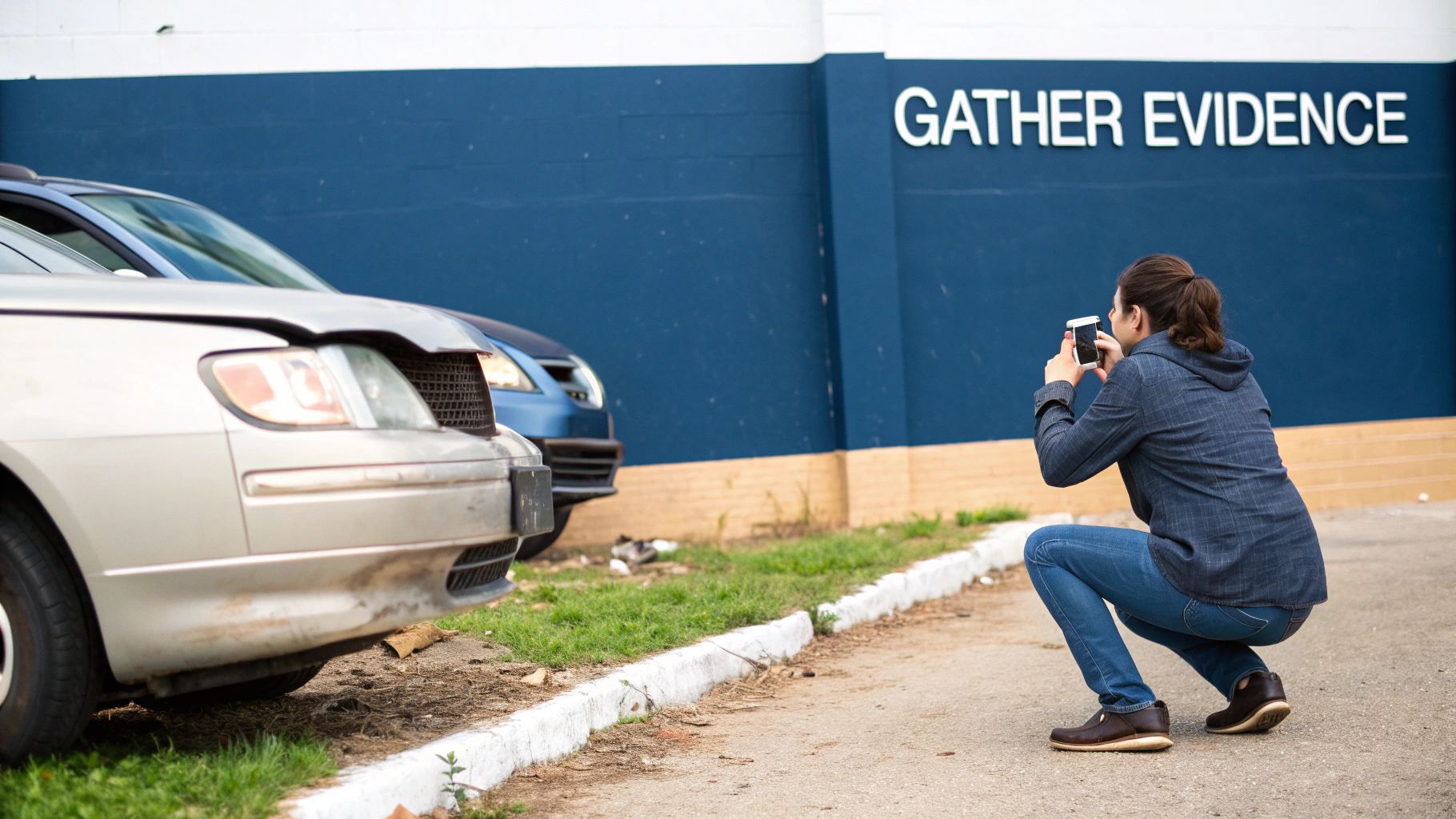
Your first priority should always be safety. Once everyone is safe, your focus needs to shift to gathering clear, solid evidence. This initial groundwork is the foundation of a successful claim.
Your First Steps After an Incident
Whether you’re dealing with a car accident, a burst pipe flooding your kitchen or a holiday gone wrong, the principle is the same: document everything honestly and accurately.
This is not just about ticking a box on a form for your insurer. It is about building a provable, factual account of what happened. When you provide clear documentation from the get-go, it helps insurers like Aviva validate genuine claims much more quickly. It also protects you and all other policyholders from the financial fallout of insurance fraud, which inevitably drives up costs for everyone.
Why Early Evidence is Non-Negotiable
Getting evidence right from the start is absolutely vital. Photos, videos, the names and numbers of any witnesses and official reports all come together to create an undeniable record of the event. A strong evidence base allows your insurer to assess the situation fairly and separates your legitimate request from any opportunistic or fraudulent claims.
The scale of this process is huge. As the UK's largest diversified insurer, Aviva looks after over 21.7 million customers and handles an incredible volume of claims, paying out £29.3 billion in a recent year. This figure shows their commitment to supporting customers, but it also underlines why an efficient and honest process is so crucial.
A claim without proof is merely a story. Your goal is to provide a factual, evidence-backed narrative that leaves no room for doubt, ensuring a swift and fair resolution.
For home emergencies, quick thinking is essential to limit the damage. If you've had a leak, for instance, knowing how to immediately shut off your water mains can prevent a bad situation from becoming a catastrophe. This one action could save thousands in repair costs while you wait for help.
If you want a more detailed look at the home claims journey, be sure to read our complete guide on how to master the home insurance claims process.
Choosing How to Submit Your Aviva Claim
Right, you’ve gathered your initial evidence. What’s next? You need to formally log your claim with Aviva. They offer a few different ways to do this, and the one you pick can genuinely affect how smoothly things get started. Your choice really boils down to your comfort with technology and how complex your situation feels.
Your main options are to go digital via the MyAviva online portal or app, or take the more traditional route and speak to someone on the phone. Each has its own strengths, so it’s worth thinking about what works best for you right now.
Submitting Your Claim Online
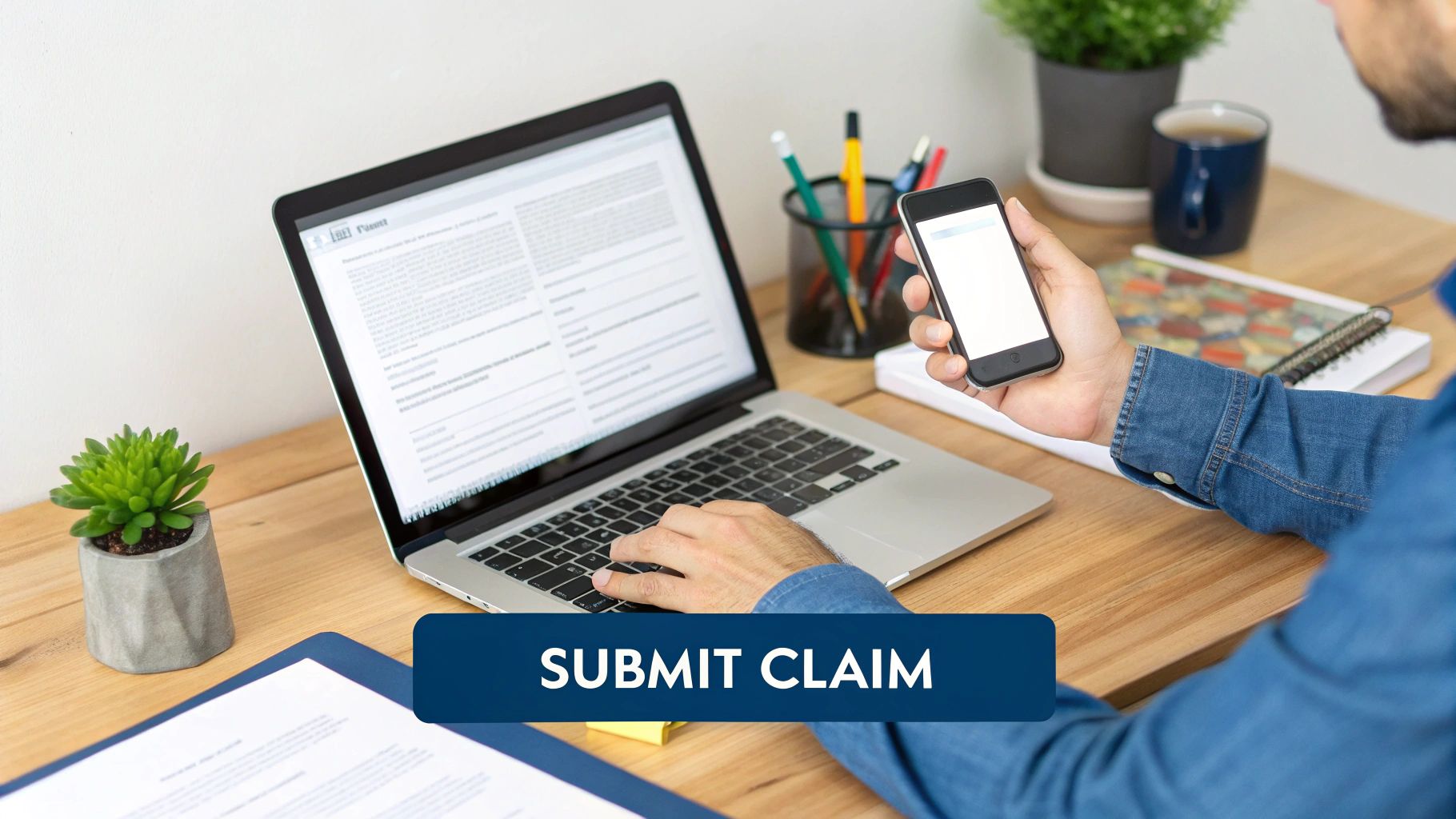
For most people, the MyAviva portal is the quickest and easiest way to kick off a claim. It’s available 24/7 , which means you’re not stuck waiting for office hours to get the ball rolling. The online forms are pretty intuitive and guide you through capturing all the essential details in a clear, structured way.
One of the biggest wins for the digital route is uploading your evidence directly. You can attach photos, videos, receipts and any official reports straight to your submission. This creates a solid, provable file from the word go.
The online portal isn’t just for logging your claim. It becomes your central hub for tracking its progress, giving you a clear view of every stage from the initial assessment right through to settlement.
Making a Claim by Phone
Sometimes, you just need to talk to a real person. This is especially true if your situation is complicated or you’re feeling shaken up by what’s happened. Aviva’s claims phone lines are staffed by trained handlers who can walk you through the entire reporting process.
To make that call as productive as possible, do yourself a favour and get all your key info ready beforehand. A little bit of prep saves a lot of hassle and helps the handler get a clear picture of what’s happened.
Have these details to hand:
- Your policy number. It’s the very first thing they’ll ask for.
- A clear summary of the incident. Be ready with the date, time and location.
- Details of anyone else involved. This means names, contact information and their insurance details if you have them.
- A list of the evidence you've gathered. Just mentioning you have photos, witness details or a police report number gives them the full story.
In the end, whether you choose to go online or pick up the phone, the goal is the same. You need to provide a clear, honest and well-documented account to make a claim Aviva can process efficiently and fairly.
Building a Provable Case for Your Claim
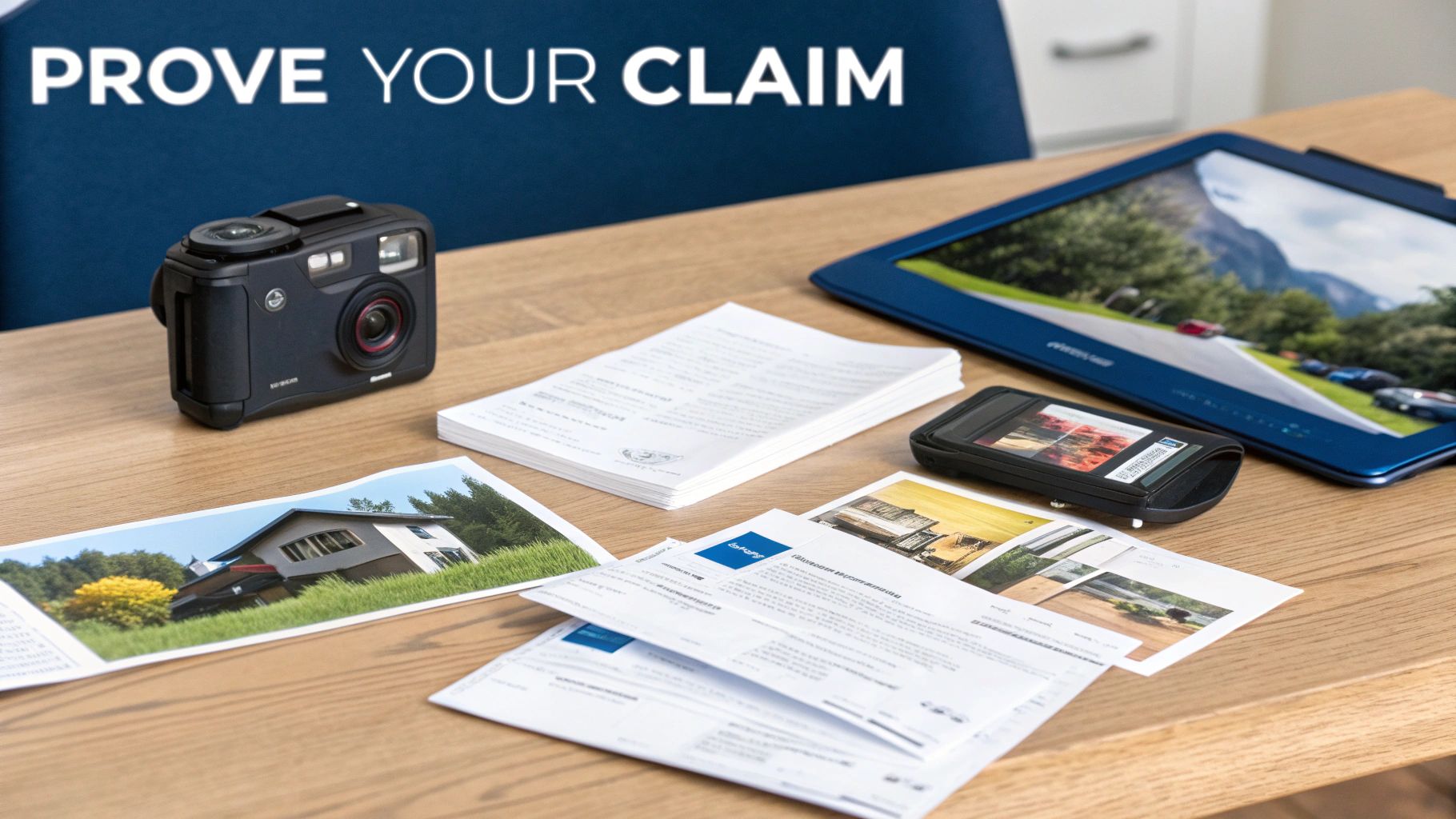
When it comes to an insurance claim, one thing matters more than anything else: proof. A successful claim is not built on hope; it is built on a solid foundation of robust, verifiable evidence. This is the bedrock that separates a claim that’s settled quickly from one that drags on for weeks.
Think of it this way: you're not just ticking boxes on a form. You're building an undeniable, factual story of what happened. When you present Aviva with clear evidence, you empower them to validate your loss quickly and fairly. It helps them process your genuine claim efficiently while also protecting the system from fraudulent activity which costs every policyholder money.
Why Proof Is So Crucial
Every single piece of evidence you gather tells a part of your story. For a car accident, dashcam footage can be the silent witness that settles everything. After a burglary, old photos or receipts for the stolen items prove not just that you owned them, but what they were worth. It is like a puzzle—each piece of proof helps the claims handler see the complete, coherent picture.
This focus on proof is especially vital in today's fiercely competitive car insurance market. Aviva managed to gain a 1.65% market share, largely by competing on price comparison websites where over 75% of UK car policies are now influenced. In an environment that intense, claims have to be processed with ruthless efficiency and accuracy to keep premiums fair for everyone.
The better you can prove your loss, the faster your claim will be resolved. It's all about removing any doubt and presenting a case that is clear, honest and backed up by indisputable facts.
Documenting Different Types of Claims
The kind of proof you'll need obviously depends on what's happened. Let’s break it down.
- Motor Claims: Do not just stop at photos of the damage. If there are witnesses, get their contact details. If the police attend, make sure you get an incident number. This creates an official, third-party record of the event.
- Home Claims (Theft): Start a detailed list of everything that was taken. Dig out any receipts, valuations or even just photos of the items in your home. The more detail you can provide, the stronger your case.
- Home Claims (Damage): Before you touch a single thing, take loads of photos of the damage from every angle. If you have to make urgent repairs to prevent things from getting worse (like boarding up a broken window), document everything and keep every single receipt.
A really important step in this process is completing a Proof of Loss form. This is a formal legal statement where you detail your losses, and getting it right is key. You can learn more from this excellent A Homeowner's Guide to Proof of Loss Forms.
Ultimately, your goal is to leave no room for questions about the legitimacy of your claim. Do that, and you will get the support you are entitled to.
The Real Cost of Insurance Fraud
When you are asked to provide solid proof for your Aviva claim, it is for two very good reasons. First, it helps the team process your genuine claim as quickly as possible. Second, it acts as a crucial barrier against insurance fraud.
It is tempting to think of fraud as a victimless crime that only affects a massive corporation’s bottom line, but that could not be further from the truth. Every fraudulent claim—from a slightly exaggerated loss to an organised ‘crash for cash’ scheme—piles onto a colossal industry-wide bill. Insurers do not just absorb this cost. It gets passed directly onto every single honest policyholder in the form of higher premiums.
Essentially, we all end up paying for the dishonesty of a few.
How Fraud Hits Your Pocket
The scale of this problem is staggering. The collective cost of insurance fraud runs into the billions every year, pushing up the price of everything from car to home insurance. This financial drain also forces insurers to invest heavily in sophisticated detection methods—another cost that ultimately finds its way back into the price of your policy.
Insurers like Aviva now use advanced data analytics and specialist investigation teams to spot suspicious patterns. They cross-reference claims and look for inconsistencies that might suggest a claim is not entirely truthful. When you provide clear, verifiable evidence, you are not just helping your own case; you are helping this system work effectively for everyone.
You can learn more about what insurance fraud really costs the industry in our detailed article.
Sometimes, the line between an honest mistake and deliberate fraud can seem blurry. It is vital to be clear on what constitutes a genuine claim versus an act that could land you in serious trouble.
Genuine Claim vs Fraudulent Activity
| Scenario | Legitimate Action | Fraudulent Action |
|---|---|---|
| Damaged Laptop | Your laptop was accidentally dropped and the screen is cracked. You claim for the cost of repair or replacement as per your policy. | You claim the laptop was stolen when it was not, or you deliberately damage it to get a new model. |
| Minor Car Bump | You truthfully report a minor whiplash injury you sustained in a low-speed collision. | You invent or exaggerate a whiplash injury to get a larger compensation payout (a common ‘crash for cash’ tactic). |
| Lost Jewellery | You claim for a lost engagement ring, providing the original receipt and a photo as proof of ownership. | You claim for a valuable ring you never owned, or you sell the ring and then claim it was stolen. |
| Water Damage | A pipe bursts, flooding your kitchen. You claim for the cost of repairing the floor and replacing damaged units. | You claim for pre-existing damage that was not caused by the burst pipe, adding it to the legitimate claim to get it fixed. |
Submitting an honest, well-documented claim is not just about following the rules—it is about maintaining the integrity of the system that protects us all.
It is a shared responsibility. By submitting an honest and well-documented claim, you not only secure your own payout but also contribute to a fairer and more affordable insurance system for everyone.
The consequences for those caught committing fraud are severe and can be life-altering. Beyond having the claim rejected, offenders can find it almost impossible to get insurance in the future.
Worse still, they may face prosecution, which can lead to hefty fines, community service or even a prison sentence and a permanent criminal record. It is a massive price to pay for a moment of dishonesty.
So, What Happens After You’ve Submitted Your Claim?
Once you’ve sent your claim off to Aviva, it enters the assessment phase. This is where a dedicated claims handler steps in to review everything you’ve provided. Their job is to build a complete picture of what happened and figure out the next steps based on your policy.
You should hear from them pretty quickly, usually within a few working days. They'll confirm they've received your claim and let you know if they need any more information from you. For more complicated claims, like those involving major property damage, Aviva might bring in a loss adjuster to visit the site and do a more detailed inspection.
Understanding the Claims Assessment
The handler's main task is to check your claim against your policy. They’ll verify your cover, go through the evidence and work out the value of your loss. This is exactly why it’s so important to build a solid, provable case from the get-go—it clears up any grey areas and helps them make a fair decision without delay.
In the UK’s fierce car insurance market, a smooth process is non-negotiable. Aviva holds a significant 12% market share , and keeping that position means having a claims process that customers can rely on. As you can discover more insights about car insurance statistics on uswitch.com, this kind of market leadership is directly tied to performance, which explains the focus on accurate and timely claims handling.
The waiting period after you submit your claim can feel like you're in limbo, but it is a critical stage. Keeping the lines of communication open and being honest with your claims handler is the best way to keep things moving and ease any anxiety.
Possible Claim Outcomes
After the assessment is done, your claims handler will get in touch to talk you through the outcome. Depending on your policy and what you’re claiming for, the resolution can take a few different forms:
- Repair: Aviva might arrange for one of their trusted suppliers to fix the damage, whether it’s your car or part of your home.
- Replacement: If an item was stolen or is damaged beyond repair, they may offer a like-for-like replacement.
- Cash Settlement: In some situations, you’ll receive a cash payment for the value of the loss, minus your policy excess. This is paid directly to you.
Just remember, your policy excess will be deducted from the final amount if you're found to be at fault. The whole process is designed to be as clear as possible, so you should always understand exactly how they reached their decision.
Common Questions When Claiming With Aviva
When you find yourself needing to make an insurance claim, a lot of questions can pop into your head. Getting clear answers is the first step to navigating the process confidently and, most importantly, honestly. A claim built on solid, factual proof is always the smoothest.
The whole claims journey follows a pretty logical path: you submit your claim, Aviva assesses it and then you reach a settlement.
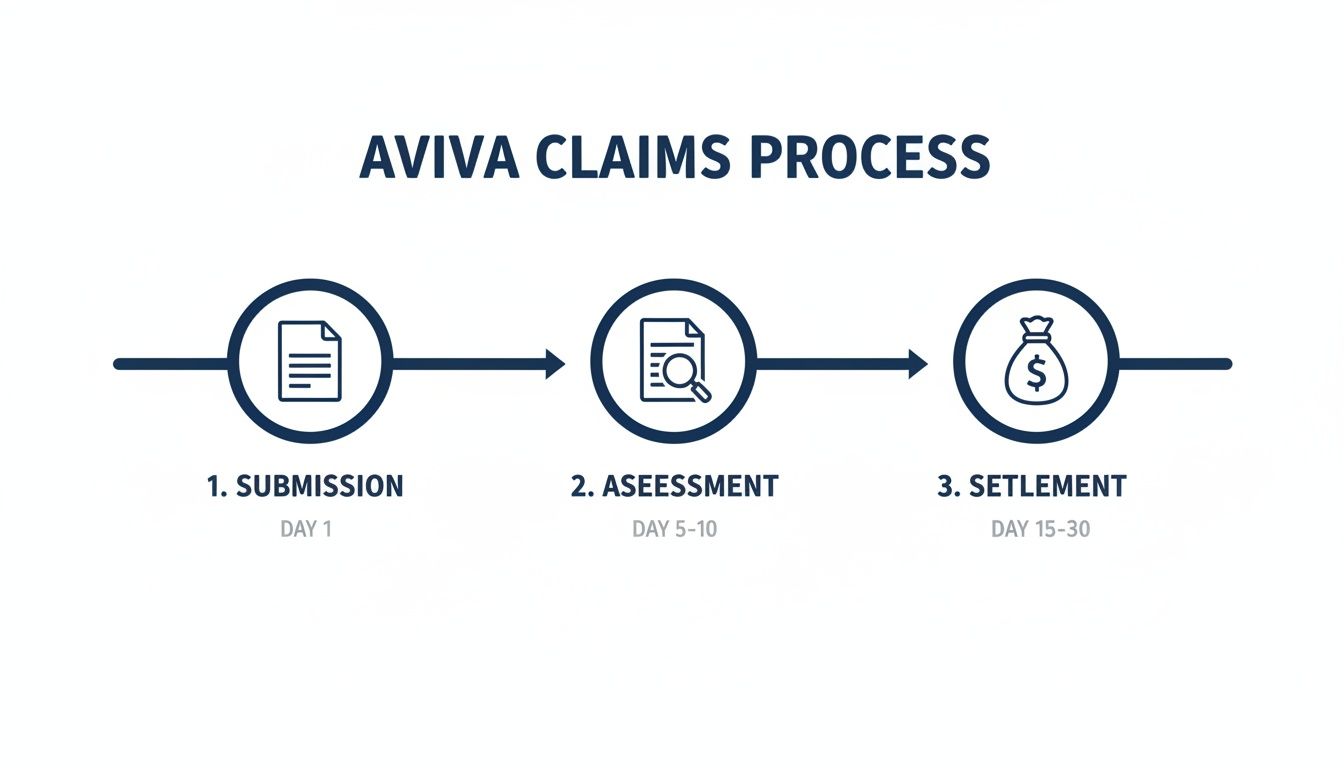
As you can see, each stage is there to make sure your claim is validated fairly. This is exactly why providing strong evidence right from the start can really speed things up.
How Long Do I Have to Make a Claim?
The simple answer is: you should let Aviva know as soon as you reasonably can after something happens. While your policy will have specific time limits, leaving it too long can make it much harder to gather credible evidence, which might complicate things.
When it comes to motor accidents, you really should report it immediately.
Will Making a Claim Affect My No-Claims Discount?
Yes, in most cases, an ‘at-fault’ claim will reduce or even wipe out your no-claims discount unless you've paid to protect it. This will likely mean your premium goes up when it is time to renew.
But do not let that stop you. The whole point of insurance is to be your financial shield against a significant loss, so making a necessary and legitimate claim is exactly what it is for.
Remember, insurance is your financial safety net. A well-documented, honest claim allows the system to work as intended, protecting you when you need it most.
What if I Disagree with Aviva’s Decision?
If you're not happy with the outcome of your claim, your first port of call is your claims handler. Get in touch to talk through your concerns and be ready to provide any extra evidence you might have.
If you're still not satisfied after that, Aviva has a formal complaints procedure you can follow. And if that still does not resolve the issue, you can take your case to the independent Financial Ombudsman Service for a final, impartial decision.
At Proova , we believe in making the insurance process clearer and more secure. By helping you document your assets before an incident occurs, we provide the undeniable proof needed to make claims faster and fairer. Learn more about how Proova can help you.