The Ultimate Prep: A Commercial Guide to the "List of Things to Take on Holiday"
Every year, millions of UK holidaymakers face the stress of lost, stolen, or damaged belongings, leading to a surge in travel and home insurance claims. For insurers, the primary challenge is not the loss itself but the costly, time-consuming disputes that follow. A typical consumer-focused "list of things to take on holiday" is of no use when a policyholder cannot prove ownership or pre-travel condition of a high-value item, turning a straightforward claim into a six-week administrative ordeal. This is where claims disputes inflate costs, cause leakage, and damage customer relationships.
This guide reframes the holiday packing list from an insurer's risk-management perspective. It’s not simply about remembering a passport; it's about implementing a pre-travel documentation strategy that protects the insurer's bottom line. We will detail the essential items and, more importantly, the specific documentation steps required for each one. By focusing on verifiable proof of ownership and condition before a trip even begins, insurers can prevent opportunistic, after-the-event fraud, eliminate ambiguity, and slash the administrative costs associated with processing claims. This isn't a checklist for travellers; it's a cost-reduction strategy for insurers, designed to make the claims process faster, fairer, and significantly more efficient.
1. Digital Inventory App (Proova)
Before considering what to pack, the most crucial item on any "list of things to take on holiday" is a complete, verified record of what is being left behind at home. A digital inventory app like Proova allows a policyholder to create an indisputable, time-stamped catalogue of their belongings. This isn't just a list; it's photographic evidence that proves ownership, condition, and value before travel.
This pre-emptive step is vital for any potential home insurance claim. Should a burglary occur while the policyholder is away, the "lounge exercise" becomes a reality: insurers ask the claimant to recall every item from memory, a near-impossible task under stress. A verified inventory eliminates this painful process, replacing disputes with evidence.
This matters greatly to insurers, as it prevents after-the-event fraud and significantly reduces claim processing times. Homeowners using Proova have seen settlements processed in under five days, a stark contrast to the multi-week disputes that often arise from a lack of proof. By having clients document assets with photos, serial numbers, and receipts, you ensure a smooth, swift claims process, reducing leakage and operational costs.
2. Passport and Travel Documents
Before a policyholder steps out the door, securing their travel documents is a critical check on their list of things to take on holiday. These documents, including passports, visas, and boarding passes, are their legal proof of identity and right to travel. Without them, the trip can end before it begins, with airlines or border officials denying access. Having a robust system for managing these items is non-negotiable.
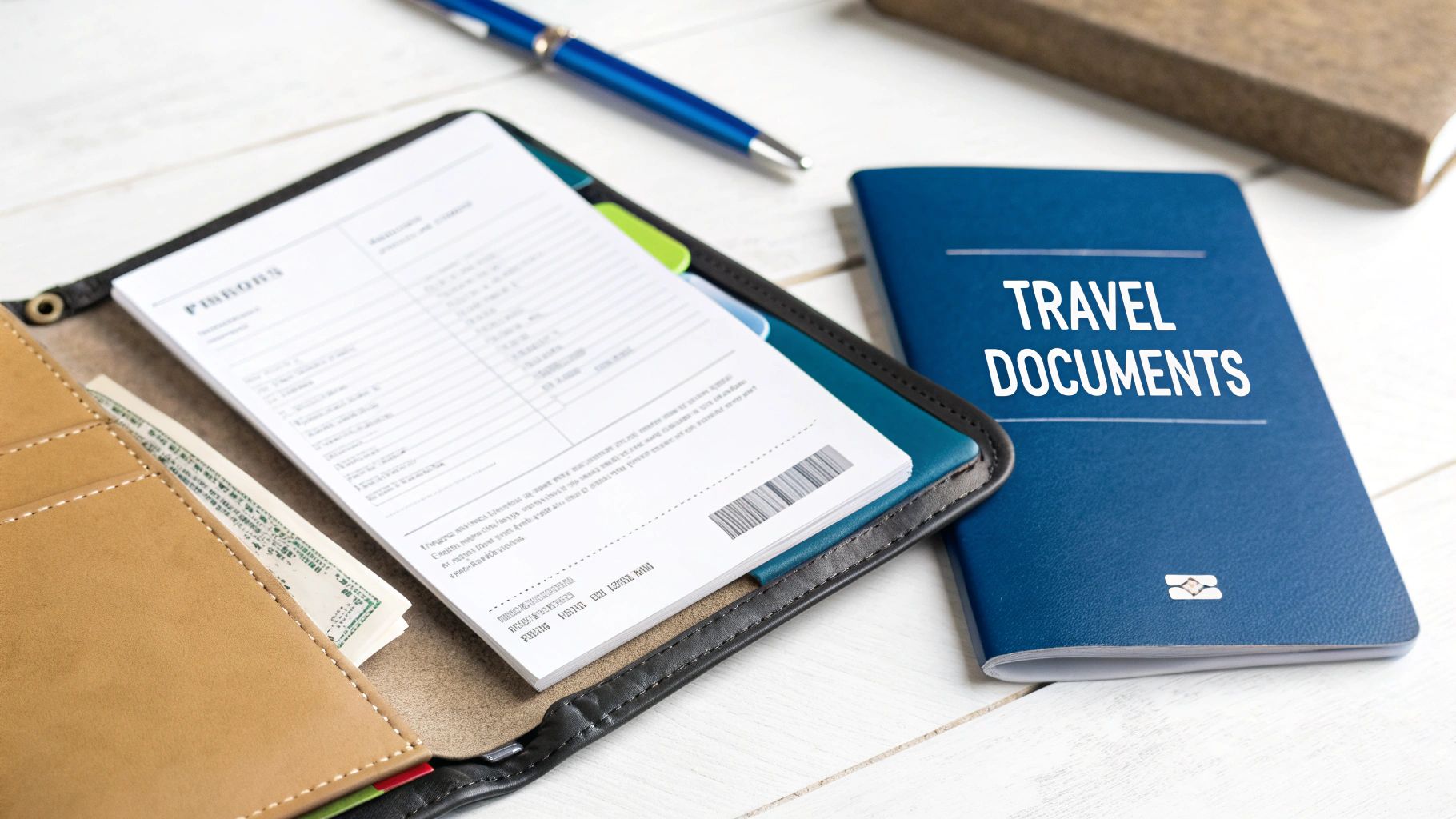
Creating a verified digital backup of these documents is a critical pre-travel step. If a passport is lost or stolen abroad, proving identity to an embassy becomes an immediate, stressful challenge. A time-stamped, verifiable digital copy dramatically simplifies this process. Travellers who have photographed their passports and visas can speed up the issuance of emergency travel documents, turning a potential holiday-ruining event into a manageable inconvenience. To keep essential documents safe and organised, consumers can invest in dedicated accessories like passport holders.
From an insurance perspective, this documentation is invaluable. While a travel policy may cover the cost of replacing a lost passport, the claim relies on the policyholder proving it existed and was valid. By encouraging the use of an app like Proova to digitally catalogue passports, visa pages, and tickets before travel, insurers gain indisputable proof. This evidence removes ambiguity, prevents disputes over policy coverage, and ensures any related claims for replacement costs or travel disruption are processed swiftly, reducing administrative touchpoints.
3. Travel Insurance Documentation
Alongside documenting what is left behind, securing proof of travel protection is the next essential item on any "list of things to take on holiday". This means having accessible, comprehensive travel insurance documentation covering medical emergencies, cancellations, and lost baggage. It serves as the financial safeguard against unforeseen events that could otherwise result in significant personal cost and complex, stressful disputes for both the policyholder and the insurer.
This documentation is the first line of defence in a claims scenario. Insurers require clear proof of policy coverage, incident reports, and evidence of loss, such as a documented inventory of luggage. Without this, claims for lost or stolen items are often delayed or disputed, turning a holiday mishap into a prolonged administrative battle. Proving what was in a suitcase after it's gone is a near-impossible memory test that invites inflated claims.
This matters to insurers because it streamlines the claims validation process and reduces the risk of fraudulent claims for items that were never packed. Policyholders with pre-verified inventories of their baggage have seen claims settled up to 90% faster. By ensuring the client has their policy number, emergency contacts, and a list of insured items ready, the evidence needed for a swift resolution is in place, allowing the insurer to process the claim efficiently and fairly, cutting claims leakage.
4. Credit Cards and Payment Methods
Before departure, the selection of payment methods should be a primary concern on the "list of things to take on holiday". Relying on a single card or just cash creates significant risk. A diversified payment strategy, including at least two different credit or debit cards plus a small amount of local currency, provides essential redundancy. This preparation is crucial for managing expenses and protecting against theft, loss, or unexpected card freezes by the bank.
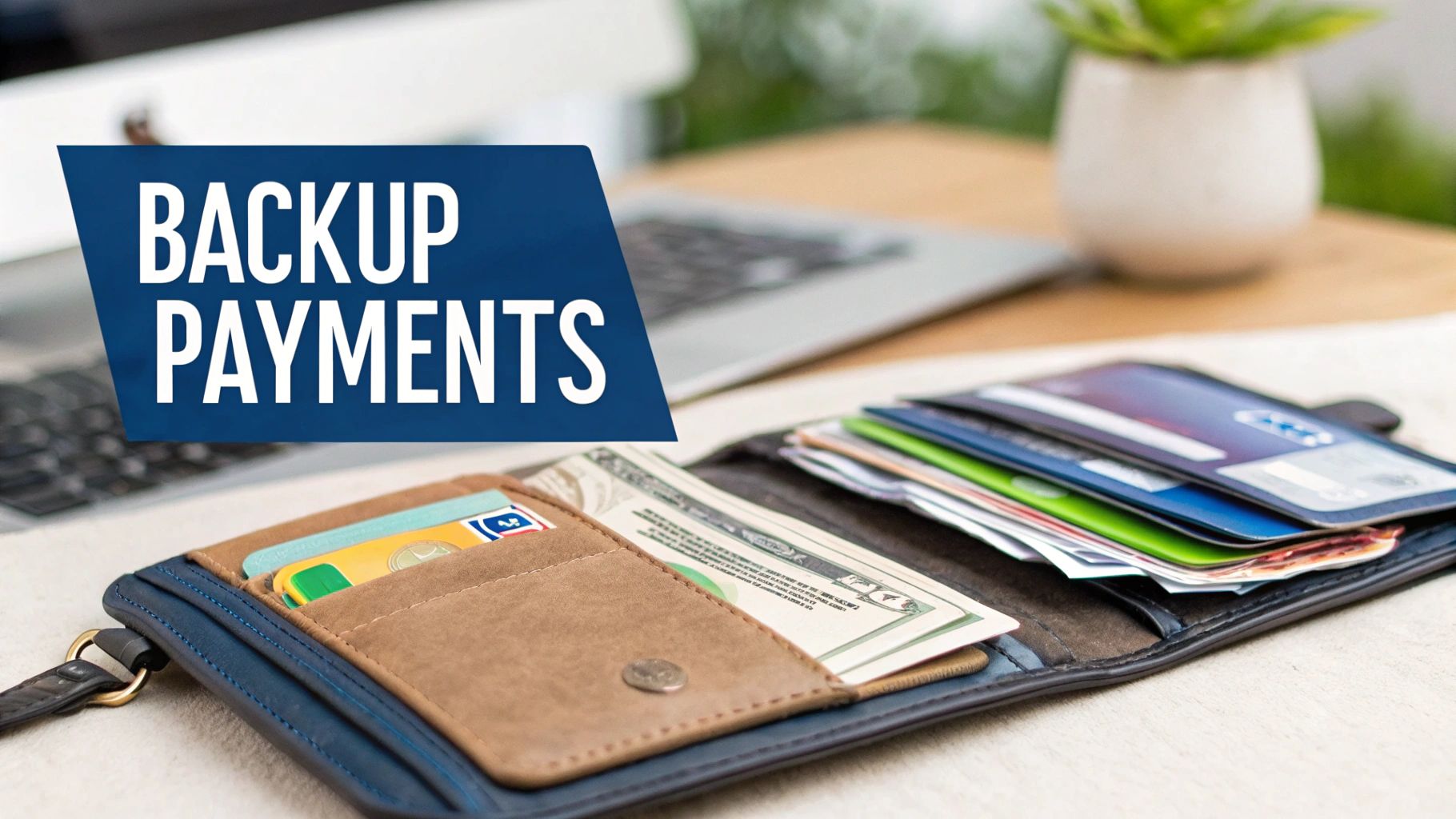
Proactive documentation helps streamline any subsequent insurance claim. If a wallet is stolen, providing evidence of the cards carried, alongside any receipts for emergency cash withdrawals, can accelerate the claims process. Business travellers who photograph card details and keep digital receipts find expense reconciliation far simpler and more accurate.
For insurers, this level of personal documentation demonstrates responsible behaviour and simplifies the verification of losses claimed under a travel policy. It helps validate the extent of the financial disruption caused by theft and reduces ambiguity, leading to quicker claim assessments and settlements. By having clear, pre-travel records of payment methods, a smoother financial recovery is ensured, protecting both the policyholder and the insurer from inflated claims.
5. Medications and Prescription Copies
Beyond securing the home, managing personal health while travelling is a critical part of any "list of things to take on holiday". Ensuring policyholders have essential medications and copies of their prescriptions is not just about convenience; it is a vital step in risk management. This simple documentation prevents serious complications at customs, enables swift replacement if medication is lost or stolen, and provides crucial information to medical professionals in an emergency.
This pre-emptive measure is vital for a smooth journey. Airport security and customs officials in many countries require proof that medication, especially controlled substances, is for personal use. A traveller without a verifiable prescription risks having their medication confiscated, leading to significant health risks and holiday disruption. A photograph of the prescription or a letter from their GP can prevent lengthy delays and stressful interrogations.
From an insurer's perspective, this documentation is invaluable. If a policyholder's luggage containing medication is lost, a claim for emergency replacement and medical consultation is often necessary. Having a digital copy of the prescription allows for faster, verified claims processing, reducing the administrative burden and costs associated with sourcing emergency medical care abroad. It turns a potential medical crisis into a manageable, documented event that minimises claim costs.
6. Emergency Contacts and Important Numbers
Beyond physical items, one of the most vital things to take on holiday is a consolidated list of critical contacts. This document should include the travel insurance provider's 24-hour helpline, local embassy or consulate details, bank card cancellation numbers, and key family contacts. This isn't just a convenience; it's the primary action plan in a crisis, ensuring the policyholder can immediately access the right support network.
This pre-emptive preparation is crucial for any potential travel or insurance incident. Should a wallet or phone be stolen, knowing exactly who to call prevents panic and minimises financial or personal risk. Instead of scrambling for information under stress, a readily accessible list allows the policyholder to report the loss, cancel cards, and notify their insurer without delay, which is a key requirement in most travel insurance policies.
For insurers, this proactive step by a policyholder is highly beneficial. It demonstrates diligence and significantly speeds up the initial reporting process (FNOL), which is the first step in any claim. Policyholders who can quickly provide their policy number and report a theft are far more likely to have a smooth claims experience, avoiding the delays that come from missing critical information during an emergency. This organised approach builds a foundation of trust and efficiency from the start.
7. Electronics and Chargers (with Serial Numbers)
Smartphones, laptops, cameras, and other electronic devices are not just conveniences; they are high-value assets and prime targets for theft on holiday. Documenting these items, along with their power adapters and cables, is a non-negotiable part of any "list of things to take on holiday". This isn’t just about making a packing list; it's about creating an evidential record with serial numbers to protect against loss and streamline any potential insurance claim.

This pre-travel documentation is crucial for validating ownership. Insurers often require proof that a specific device was owned, and a serial number is the most definitive evidence. For example, a photographer who documented his camera gear with Proova successfully claimed over £8,000 after a theft, as the serial numbers provided irrefutable proof of ownership and made it easier to report the items as stolen. To minimise the risk of losing valuable electronics and other items during a journey, consumers might explore solutions like Airtag Holders for travel.
From an insurer’s perspective, this level of detail prevents fraudulent claims for non-existent or previously sold electronics. When a policyholder can provide a time-stamped, verifiable record of their devices and serial numbers, it eliminates disputes and fast-tracks the claims process. This proactive step transforms a potentially contentious claim into a simple verification exercise, reducing administrative costs and ensuring legitimate claims are paid without unnecessary delays.
8. Copies of Important Documents (Distributed Storage)
Losing a passport or wallet abroad can quickly turn a holiday into a logistical nightmare. While originals are irreplaceable on the spot, having distributed copies is the next essential item on a "list of things to take on holiday". This involves creating both physical and digital backups of passports, visas, and insurance documents, then storing them separately from the originals. This redundancy is a lifeline, ensuring identity can be proven and critical information accessed even if the primary documents are stolen.
This proactive measure dramatically simplifies the process of getting emergency travel documents from an embassy or consulate. Instead of starting from scratch, the policyholder can provide clear, legible copies, which can reduce a weeks-long ordeal into a matter of days. For insurers, this documentation is equally crucial, as it provides immediate proof of travel dates, policy numbers, and identities needed to start a travel insurance claim without delay.
By separating the risk, a potential crisis becomes a manageable inconvenience. Policyholders should be advised to store physical photocopies in their hotel safe, email encrypted digital versions to themselves, and use an app like Proova to create a verified, time-stamped digital record of every document. This organised evidence protects the client and provides insurers with the clear proof needed for swift assistance. Learn more about preventing fraud with verified evidence.
9. Clothing and Footwear (Seasonal Appropriate)
While packing the right clothes seems obvious, documenting them for insurance purposes is a critical step often missed in a typical "list of things to take on holiday". Beyond ensuring comfort, a catalogued record of attire is vital, especially if luggage contains high-value items like designer suits, specialised ski gear, or expensive footwear. Should bags be lost, stolen, or delayed, proving the existence and value of these contents becomes a major hurdle in any subsequent insurance claim.
Without evidence, insurers must rely on memory—a flawed process that leads to disputes, delays, and leakage. For example, business travellers who photograph their suits and travel outfits with receipts can substantiate claims for delayed luggage, preventing financial loss when they are forced to purchase replacements for meetings. Similarly, families can document expensive children's clothing, turning a potential claims dispute into a straightforward, evidence-based process.
This pre-emptive documentation matters to insurers as it prevents inflated claims and provides a clear basis for settlement. By encouraging clients to create a quick photographic inventory of key clothing items before travel, especially those of significant value, ambiguity is replaced with proof. This simple action ensures that if luggage goes missing, its true value can be recovered without the stress of protracted negotiations, protecting the insurer from overpayment.
10. Toiletries and Personal Care Items
While often packed last, toiletries and personal care items are a crucial part of any “list of things to take on holiday”. This goes beyond simple hygiene; it’s about documenting high-value assets that are frequently lost, stolen, or damaged in transit. Items like expensive skincare, electric toothbrushes, or designer grooming tools are prime targets for disputes when luggage goes missing or is mishandled. Without proof, insurers may only offer a nominal, depreciated value.
This proactive documentation is critical for any subsequent insurance claim. Should a checked bag be damaged or lost, insurers will require proof of ownership and value for its contents. Simply listing “skincare products” is insufficient and invites disputes. However, presenting a time-stamped, photographic record of a £150 face cream or a £200 grooming device provides indisputable evidence, preventing drawn-out negotiations over replacement costs.
This matters to insurers because it mitigates fraudulent claims for non-existent luxury items and substantiates the genuine value of a policyholder's belongings. Policyholders who have catalogued their valuable toiletries pre-departure have successfully claimed the full replacement cost after airline damage, turning a potentially frustrating loss into a straightforward claims process. Documenting these smaller, high-value items reduces dispute-related costs for the insurer.
11. Travel Adapters and Universal Power Solutions
Before departure, ensuring electronics can be powered up safely is a non-negotiable part of the "list of things to take on holiday". A high-quality universal travel adapter is more than a convenience; it is essential protection for valuable gadgets against incompatible outlets and potentially damaging voltage differences found abroad. These devices allow charging of everything from a phone and laptop to specialist camera equipment, irrespective of regional plug standards.
This proactive measure is crucial for protecting high-value assets. Business travellers have prevented catastrophic laptop failure from voltage spikes by using reputable adapters, while photographers have safeguarded thousands of pounds worth of camera gear. Using a cheap, uncertified adapter risks not only the device itself but also creates a fire hazard—a scenario with severe implications for both safety and any potential travel insurance claim.
For insurers, the use of appropriate electrical equipment demonstrates due diligence on the part of the policyholder. A claim for a device damaged by a power surge may be scrutinised if it's found that an unsuitable or low-quality adapter was used. By investing in a reliable, certified power solution, the policyholder is actively mitigating risk, which in turn reduces the likelihood of a claim and protects the insurer's loss ratio.
12. Travel Insurance Claim Evidence and Documentation System
Beyond packing luggage, the most valuable item on any "list of things to take on holiday" is a systematic record of what is being taken. This isn't just a list; it’s a pre-emptive defence against the administrative cost of travel insurance claims for lost, stolen, or damaged belongings. By systematically photographing valuables, noting serial numbers, and documenting receipts before leaving, the policyholder creates an undeniable portfolio of evidence.
This structured approach transforms a potentially combative claims process into a simple verification exercise. Insurers are tasked with mitigating fraud, but without clear proof, legitimate claims can get stalled for weeks in disputes. A well-organised documentation system eliminates ambiguity and demonstrates ownership and condition from the outset, enabling a far smoother process.
For insurers, this pre-emptive evidence is critical. It helps prevent opportunistic, after-the-event fraud and significantly accelerates legitimate payouts. Homeowners using this method have seen claims that typically take over 21 days settled in under a week, simply because the evidence was clear and indisputable. This system protects valuables and ensures that if the worst happens, the policyholder can move from theft to payout with minimal friction.
12-Item Holiday Packing Comparison
| Item | Implementation complexity | Resource requirements | Expected outcomes | Ideal use cases | Key advantages |
|---|---|---|---|---|---|
| Digital Inventory App (Proova) | Low–moderate (app setup & item cataloguing) | Smartphone, camera, cloud storage, optional subscription | Verified digital inventory; faster, evidence-backed claims | Pre-travel cataloguing; high-value households; insurance claims | Irrefutable evidence for claims; speeds settlements; fraud deterrence |
| Passport and Travel Documents | Low (obtain/renew; simple documentation) | Government application, fees, secure storage | Legal travel authorization; identity verification | All international travel; border control | Universally accepted ID; access to consular assistance |
| Travel Insurance Documentation | Low–moderate (policy selection & documentation) | Insurance provider, premium payment, policy paperwork | Financial coverage for medical/loss; 24/7 support | Trips with cancellation or medical risk; valuable possessions | Broad financial protection; emergency assistance |
| Credit Cards and Payment Methods | Low (obtain cards; notify bank before travel) | Bank accounts, cards, emergency cash, ATM access | Secure payments; fraud protection; traceable records | Everyday spending, emergencies, expense tracking | Global acceptance; fraud safeguards; chargeback options |
| Medications and Prescription Copies | Low–moderate (GP prescriptions & documentation) | Prescriptions, original labeled containers, medical letters | Continuity of care; easier customs and replacements | Chronic conditions, controlled substances, long trips | Ensures treatment continuity; supports emergency care |
| Emergency Contacts and Important Numbers | Low (compile and save contacts) | Contact list, printed & digital backups | Quicker access to help; faster incident reporting | Any trip; emergencies and loss reporting | Immediate access to consular/insurer/family support |
| Electronics and Chargers (with Serial Numbers) | Moderate (recording serials, receipts, backups) | Devices, receipts, serial numbers, tracking enabled | Facilitates theft recovery and insurance claims | Business travel, photography, digital nomads | Serial-based proof; aids insurer validation & recovery |
| Copies of Important Documents (Distributed Storage) | Low–moderate (create and distribute copies) | Scans/prints, encrypted cloud, separate physical copies | Redundancy for quick replacement & verification | Travel with critical documents; long stays | Ensures access when originals lost; speeds processes |
| Clothing and Footwear (Seasonal Appropriate) | Low (select and pack appropriate apparel) | Appropriate wardrobe, packing strategy, research | Comfort, activity readiness, cultural appropriateness | Seasonal trips, activity-specific travel | Comfort and protection; enables planned activities |
| Toiletries and Personal Care Items | Low (pack travel-size toiletries) | Travel-size products, waterproof bags, replacements | Maintains hygiene; avoids urgent purchases abroad | All trips; long flights; hygiene-sensitive travelers | Preserves routines; prevents health issues; compact |
| Travel Adapters and Universal Power Solutions | Low–moderate (choose compatible adapter) | Universal adapter, surge protection, spares | Reliable device charging; reduced risk of damage | Multi-country trips; tech-dependent travelers | Enables charging across outlets; surge protection |
| Travel Insurance Claim Evidence & Documentation System | Moderate (system setup & comprehensive documentation) | Time, smartphone, cloud storage, organization tools | Streamlined claims; faster settlements; reduced disputes | High-value travel, frequent travelers, insurers/brokers | Comprehensive preparedness; transforms claims process; reduces fraud |
From Packing List to Profitability: The Commercial Case for Pre-Travel Verification
This guide has moved beyond typical consumer advice, reframing the humble holiday packing list as a powerful commercial tool for insurers and brokers. We have deconstructed the traditional checklist, transforming it from a simple reminder of what to pack into a strategic framework for pre-travel asset verification. By encouraging policyholders to adopt this documentation-first mindset, you are not merely helping them prepare for a trip; you are fundamentally re-engineering the post-travel claims process for commercial gain.
The insights provided demonstrate a clear pathway from proactive documentation to reduced claims expenditure. We’ve covered everything from creating a digital inventory of valuables with an app like Proova to meticulously recording serial numbers for electronics and securely storing digital copies of receipts and travel documents. Each step serves a dual purpose: it empowers the policyholder while simultaneously providing the insurer with immutable, time-stamped evidence. This pre-verified data is the antidote to the protracted, evidence-poor disputes that inflate operational costs, cause claims leakage, and damage customer relationships.
Why This Matters to Insurers
The core message is that prevention at policy inception is far more cost-effective than detection at the point of a claim. A well-prepared traveller, guided by this new standard of list of things to take on holiday , becomes a lower-risk client.
- Shifting from Reaction to Prevention: The traditional claims model is reactive, dealing with loss and potential fraud after the event. This modern approach is preventative, establishing an evidential baseline before travel, which is crucial for mitigating after-the-event fraud. According to the ABI, insurers detected £1.1 billion worth of fraudulent claims in 2022, highlighting the scale of the problem that pre-inception verification can address.
- Quantifying the Unseen: The "lounge exercise" is a stark reminder of how memory fails under stress. A pre-travel, verified inventory transforms vague recollections into a quantifiable, indisputable record, directly combating the ambiguity that leads to inflated claims and lengthy disputes.
- Operational Efficiency as a Commercial Outcome: When a claim is supported by a pre-verified inventory, the entire process accelerates. The need for loss adjuster visits diminishes, the number of touchpoints required from claims handlers is reduced, and settlement times can be cut from weeks to days. This translates directly to lower operational overheads and reduced claims leakage.
Mastering this approach is no longer optional; it is a commercial necessity in a market where efficiency and fraud prevention are paramount. By integrating these principles into your client communications and policy recommendations, you move from being a simple provider to a proactive risk management partner. This pivot not only protects your bottom line but also enhances client retention by demonstrating tangible value far beyond the policy document. The ultimate benefit is a streamlined, transparent, and more profitable claims ecosystem, all originating from a smarter list of things to take on holiday .
Ready to transform your claims process from a costly, reactive system into a proactive, fraud-resistant operation? Discover how Proova provides the pre-inception verification platform to eliminate disputes, accelerate settlements, and significantly reduce claims leakage. Visit Proova to see how you can turn every policyholder's preparation into your profitability.