How to change address on car insurance: A guide for insurers on preventing premium fraud
Changing an address on a car insurance policy might seem like a minor administrative task, but for an insurer, it is a critical risk event. Failing to verify this change is a direct cause of premium fraud, claims leakage, and costly downstream disputes. This guide outlines why unverified address changes are a significant financial drain and how insurers can mitigate this risk.
Why a Change of Address Is a Major Risk Signal for Insurers
For an underwriter, a change of address is far more than a simple data update. It's a critical signal that the risk profile has changed, often significantly. An address dictates the underwriting risk associated with theft, vandalism, and accident frequency. If a policyholder moves from a low-risk to a high-risk area without informing their insurer, the policy is immediately mis-priced, creating a direct financial liability.
The temptation for policyholders to provide a lower-risk address to reduce their premium is significant. According to the Insurance Fraud Bureau (IFB), motor insurance is the sector most affected by fraud, accounting for 60% of all claims fraud. Much of this is driven by misrepresentation at inception or mid-term, with address fraud being a primary component.

The financial incentive is clear. According to Compare the Market's March 2026 data, motor premiums in some UK postal towns can vary dramatically, from an average of £1,189 in Birmingham to significantly lower figures in less populated regions. This disparity makes it crucial for insurers to treat a change of address on car insurance as a full re-underwriting event, not a simple record update. Discover more about how location impacts premiums and why accuracy is essential.
The Commercial Costs of Inaction
When a claim is made from an undeclared, higher-risk address, the cost to the insurer extends far beyond the claim value itself. The reliance on unverified, self-declared information at the point of change creates a cascade of avoidable operational and financial costs.
For a claims director, an incident at an undeclared address isn't just a claim; it's the start of a costly investigation into premium fraud. Every pound paid out on a claim priced against the wrong risk profile is direct financial leakage, eroding underwriting profit.
The consequences of this inaction are severe:
- Costly Fraud Investigations: The claims team must investigate where the policyholder actually resides, often requiring loss adjuster visits to verify the incident location and where the vehicle is normally kept. This is reactive, inefficient, and expensive.
- Prolonged Claims Disputes: The validity of the entire policy is called into question, leading to disputes over whether the claim should be paid. This extends claim lifecycles and increases legal and administrative costs.
- Reputational and Regulatory Exposure: Voiding a policy, even justifiably, can lead to complaints to the Financial Ombudsman Service (FOS) and negative publicity, damaging brand reputation and attracting regulatory scrutiny.
This entire sequence of costs stems from a single failure: trusting self-declared information without verification. The solution is to mandate verification when a policy amendment is requested. By confirming the new address before the risk profile shifts, insurers can prevent this cascade of costs, shut down premium fraud at its source, and ensure every policy is priced accurately.
The True Cost of an Inaccurate Policy Address
While policy invalidation is the ultimate sanction, the persistent, day-to-day problem for insurers is the financial leakage caused by claims originating from inaccurately recorded addresses. For claims directors, it’s a familiar and costly headache.
The "lounge exercise" for motor insurance is simple: ask a policyholder where their car is kept, and they’ll say their driveway. When a theft claim is filed from a high-risk area 50 miles away, you’ll spend weeks unravelling a case of premium fraud that could have been prevented.
This isn't an administrative issue; it's a direct threat to profitability. The commercial cost of trusting a self-declared address shows up in several expensive ways.
The Cascade of Avoidable Claims Costs
An inaccurate address triggers a time-consuming investigation that instantly negates any underwriting profit on the policy. The claims team is forced into a reactive position, attempting to establish facts after the loss has occurred.
This reactive scramble includes:
- Increased Loss Adjuster Visits: Adjusters are dispatched not just to assess damage, but to investigate the vehicle's garaging address and incident location. This duplicates effort and adds significant operational expense.
- Protracted Claims Disputes: Instead of a swift settlement, the claim becomes mired in disputes over material misrepresentation. Weeks are lost gathering evidence and debating policy validity, increasing claim handling costs.
- Paying Out on Mis-priced Risk: The worst-case commercial outcome is paying a claim priced against a low-risk postcode but occurring in a high-risk one. Every such payout represents direct premium leakage and encourages further fraudulent behaviour. You can learn more by reading our article on the real cost of inaccurate underwriting in insurance.
A single claim from an undeclared high-risk address can cost an insurer more in investigation and dispute expenses than years of premium income from that policy. It’s a loss-making proposition from inception.
This entire cascade of costs is preventable. The point of failure is not at the claims stage; it’s at the point of policy amendment. By failing to verify an address change when it’s requested, insurers leave the door wide open for opportunistic and organised fraud.
The solution is to shift from trust to verification. Requiring geocoded, time-stamped evidence of a vehicle's new garaging address when a policyholder requests to change address on car insurance is the only way to prevent this leakage. It is a proactive measure that eliminates costly investigations before they begin, protecting the bottom line and ensuring premiums accurately reflect the covered risk.
How to Verify Address Changes and Mitigate Risk
Relying on a policyholder to self-declare an address change is a strategy built on trust, not data—an approach that leaves insurers dangerously exposed to premium fraud.
Every request to change address on car insurance should be treated as a critical underwriting event. However, current processes often handle it as a low-level administrative task. This passive approach is a direct cause of premium leakage and downstream claims costs. The core vulnerability is the absence of verification. A simple phone call or online form allows a policyholder to shift their declared risk from a high-premium urban area to a low-risk rural one without providing proof. The insurer adjusts the premium downwards, unknowingly accepting a mis-priced risk that will only surface after a claim.
From Unreliable Self-Declaration to Verified Fact
A modern, verification-first approach flips this broken model on its head. It shifts the focus from simply updating a record to actively re-underwriting the policy with verified data. This is about establishing facts at the point of change, not investigating them after a loss.
Consider the difference between these two workflows:
- Current Approach (Fails): A policyholder calls to update their address. The agent changes the postcode in the system, and the premium is recalculated. The risk of fraud is high, and the insurer holds no evidence of the vehicle's new location.
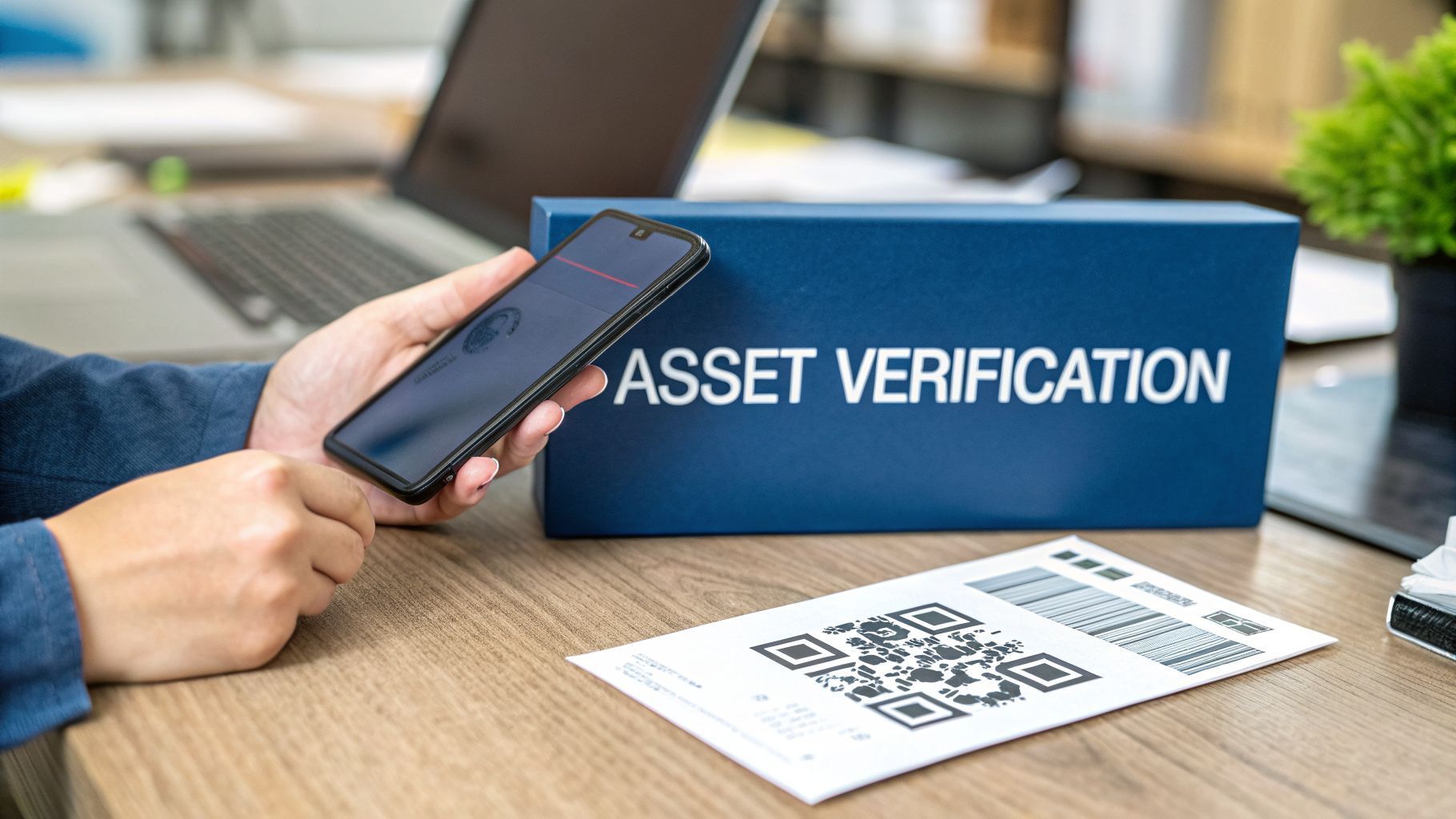
- Verification-First Method (Solves): A policyholder requests an address change. They are asked to use a simple tool, like the Proova app, to submit a time-stamped, geocoded photograph of their vehicle at the new address. This instantly confirms the new location and provides auditable proof, preventing fraud before it occurs.
This single step transforms a high-risk process into a powerful risk mitigation tool.
Verifying More Than Just the Postcode
This method allows for the verification of other crucial underwriting factors. The most significant is the vehicle's overnight parking situation—a key determinant of risk.
For an underwriter, the difference between a car kept in a locked garage versus on the street is a significant variable. Photographic evidence makes this distinction a verifiable fact, justifying premium adjustments and preventing future disputes.
The following infographic shows the costly process that begins when an insurer relies on an incorrect address, leading to complex investigations and payout disputes.

The table below contrasts the high cost of inaction with the commercial benefits of an evidence-based approach.
Address Verification Methods Cost-Benefit Analysis for Insurers
| Verification Method | Fraud Risk | Administrative Cost | Claim Dispute Likelihood |
|---|---|---|---|
| Traditional Self-Declaration | High. Relies entirely on trust, leaving the door wide open for opportunistic and deliberate premium avoidance. | Low (Initial), High (Downstream). Cheap to record but leads to expensive investigations and claims leakage later. | High. Lack of upfront evidence makes disputes over garaging and location common and difficult to resolve fairly. |
| Technology-Led Verification | Very Low. Time-stamped, geolocated evidence makes it nearly impossible to falsify the vehicle's location or parking setup. | Low. A small, one-time action by the policyholder eliminates the need for future costly manual checks or investigations. | Very Low. Creates an indisputable record, preventing arguments and ensuring claims are settled based on verified facts. |
This highlights how failing to verify information at the outset inevitably leads to expensive, reactive processes at the claim stage. By implementing a simple verification step when a policyholder wants to change their address, insurers can stop this entire cascade of costs. It prevents a multi-thousand-pound problem with a ten-second check, ensuring every policy is accurately priced and the risk held is the risk covered.
Why Your Postcode Dictates Your Premium
For an underwriter, a change of address is a fundamental re-evaluation of risk. The difference in premiums between two postcodes can be substantial, creating a powerful incentive for policyholders to misrepresent their address.
When a policy is priced for a low-risk postcode but the vehicle is kept in a high-crime area, the insurer is unknowingly subsidising a high-risk policy. This is a recurring, real-world loss that only surfaces at the point of a claim. This discrepancy is a primary driver of premium avoidance and organised ‘ghost policy’ fraud, where low-risk "drop" addresses are used to obtain cheap cover.
The Postcode Premium Gulf
The financial gap between different locations is significant. Market data consistently shows that premiums vary wildly based on geography, reflecting local trends in theft, accidents, and claims frequency.
For instance, industry data through November 2025 showed that Manchester and Merseyside saw comprehensive car insurance costs fall by 18% (£178) annually. In stark contrast, West Central London remained the most expensive postcode, with average premiums at £1,444 . You can explore more on these regional premium shifts on wtwco.com. This enormous variation highlights the immediate financial danger of an unverified address.
From Data Gap to Financial Drain
This geographical premium difference is precisely what fuels fraudulent activity. Insurers who rely solely on self-declaration are exposed to significant financial risk. The cost of inaction is clear:
- Premium Leakage: Collecting a premium for a quiet village while covering a risk in a bustling city centre makes the policy unprofitable from day one.
- 'Ghost Policy' Fraud: Organised fraudsters exploit trust-based systems by using low-risk "drop" addresses to secure cheap policies for vehicles never kept there, a problem the IFB has repeatedly highlighted.
- Inflated Claims Costs: When a claim is filed from the true, high-risk location, the insurer not only pays the claim but also incurs significant costs investigating the original misrepresentation.
Trusting a declared address without evidence is an open invitation for premium fraud. An insurer might save pennies in administrative time but stands to lose thousands on a single mis-priced claim.
The solution is not more complex post-claim investigations; it's preventing the inaccuracy from occurring. By making geolocated evidence a standard part of the address change process, insurers can shut down this avenue for fraud. Understanding how geo-location data strengthens insurance claims is the first step towards building a more resilient and profitable underwriting strategy. It transforms the address from a point of trust to a point of fact.
Shifting to a Proactive Address Verification Strategy
Relying on a customer to report a move via a call or online form is a system built on trust—a trust that costs the industry millions in premium fraud. Insurers must move from this reactive model to a proactive, evidence-based one. The only way to stop premium fraud linked to address changes is to close this verification loophole.
This is not about creating customer friction; it's about treating every request to change an address on car insurance as a re-underwriting event that requires validation. This establishes an auditable, evidence-based fact, turning an administrative task into a powerful checkpoint against fraud.

The Power of Pre-Amendment Verification
Implementing a verification-first workflow is straightforward. When a policyholder requests an address update, they are prompted to provide geocoded, time-stamped proof of the vehicle's new location via a simple smartphone app. This places the onus of proof on the policyholder.
The commercial benefits are immediate:
- Parking Verification: A photo of where the car is kept overnight—garage, driveway, or street—allows for more accurate risk assessment and premium calculation.
- Reduced Investigation Time: Verified data at the point of change virtually eliminates the need for costly investigations into a policyholder's address if a claim is made.
- Deterrence: The existence of a verification step is a powerful deterrent, filtering out opportunistic fraudsters.
This shift is critical, given the vast premium differences across the UK. Data from June 2025 to June 2026 showed drivers in the Scottish Borders paid an average of £902 annually. In contrast, those in the West Midlands faced premiums of £2,056.42 —a 127.94% difference. When the financial stakes are this high, self-declaration is no longer a viable underwriting strategy.
By requiring simple, app-based proof, you stop a fraudulent claim before the policy is re-rated, not after the loss has occurred. It’s about preventing a claim, not just detecting a lie.
Quantifiable Commercial Outcomes
Integrating verification delivers tangible results. By embedding this into existing systems, such as a modern self-service customer portal, insurers can achieve significant commercial wins:
- Reduce claims from undeclared addresses by a measurable percentage.
- Cut investigation time for location-based fraud by over 50%.
- Eliminate premium leakage from postcode misrepresentation.
This proactive approach changes the dynamic entirely. Instead of absorbing the cost of fraud, you are fighting fraud before it happens with the power of verified evidence . This protects your bottom line, ensures fair pricing for honest customers, and builds a more resilient and profitable motor book.
Common Questions on Address-Related Premium Fraud
Implementing tighter controls on address changes often raises questions from internal teams. Addressing these concerns is key to demonstrating how a small upfront process change delivers a significant reduction in claims costs and fraud.
Here are the common questions insurers and brokers ask when considering a verification-first strategy.
Is It Too Resource-Intensive to Check Every Address Change?
Manual checks are. Technology-led verification is not.
The legacy approach of manual validation is slow and ineffective. A modern approach places the responsibility on the policyholder to provide proof in seconds.
Using a platform like Proova automates this process when a customer needs to change the address on their car insurance . This digital step not only cuts administrative overhead but also eliminates the far greater future cost of investigating a fraudulent claim. The cost of inaction is far higher than the cost of automated prevention.
How Does Address Verification Stop Ghost Policy Fraud?
Ghost policy fraud is predicated on deception. The fraud relies on using a fake or "drop" address in a low-risk postcode to obtain cheap insurance for a vehicle actually located in a high-risk area.
Pre-amendment verification makes this business model unviable. By requiring time-stamped, geolocated evidence of where the vehicle is actually kept before cover is changed, you create an undeniable record. This single action stops fraudsters from insuring a vehicle in the Scottish Highlands when it's parked every night in Central London.
For claims directors, this isn't just about stopping one fraudulent policy. It's about dismantling a systemic fraud that directly causes premium leakage and distorts risk pools.
How Does This Verification Process Benefit Honest Policyholders?
For insurers, verifying every address change builds a fairer system where premiums genuinely reflect risk. This stops honest customers from subsidising the costs created by fraudsters. Crucially, it ensures their own policy remains valid, protecting them from the financial and legal consequences of being unintentionally uninsured.
For brokers, offering a seamless verification tool is a competitive differentiator. It reduces the likelihood of post-claim disputes and improves client retention by demonstrating a commitment to accurate cover.
Can We Legally Decline a Claim If the Address Was Wrong?
Yes, a material misrepresentation—such as an incorrect address that would have altered the premium or underwriting decision—can be grounds to void a policy.
However, this path is fraught with commercial risk. It often leads to protracted legal disputes, FOS complaints, and significant reputational damage.
Preventing the issue with verification at the outset is commercially, legally, and reputationally superior to managing the fallout after a claim. This strategy directly serves the core business objectives of reducing claims costs and eliminating disputes.
Stop losing money to address-related premium fraud. Proova gives you the tools to verify every policyholder's location at the point of change, eliminating disputes and cutting claims costs. Discover how pre-inception verification can protect your motor book by visiting https://www.proova.com.